Illinois Supreme Court Debates Whether State Union Deals Conditional on Appropriations

5693199173_9a021e40e3_zThe state government enters into a contract with an employee union calling for pay increases for thousands of employees. The state legislature fails to appropriate enough money to cover the increases. Is the state in breach of contract, or was the state’s contractual promise to pay the increases conditional on the legislature actually appropriating the money? That’s the question the Illinois Supreme Court debated late in its September term, hearing oral argument in State of Illinois v. American Federation of State, County, and Municipal Employees, Council 3. Our detailed summary of the facts and lower court opinions in AFSCME is here.

The State of Illinois agreed to a four year collective bargaining agreement in 2008 with the defendant union, which represents most state employees. The CBA provided for small twice-yearly wage increases in 2009, 2010 and 2011, but the union agreed to defer the increases in 2009 and 2010 in deference to the state’s budget problems. In early 2011, then-Governor Quinn proposed a budget which would have funded the increases for that year, but the legislature balked. When a budget was finally approved, there wasn’t enough money to finance the increases for employees at 14 agencies. AFSCME sought arbitration, and the arbitrator ultimately ordered the increases paid. The State filed a complaint seeking review of the arbitrator’s order. Not long after, the legislature made certain supplemental appropriations, and attrition at some agencies opened up further budget room, but employees in six agencies remained without the increases. The trial court held that an overriding public policy made the CBA invalid unless the legislature appropriated the necessary money. Nevertheless, the court ultimately ordered payment of partial increases. The Appellate Court reversed the Circuit Court, holding that the State’s contracts were not implicitly conditioned on appropriations.

Counsel for the State began the argument. He argued that the Appellate Court had erred in two respects: first, by misinterpreting the Public Labor Relations Act to mean the opposite of what it says; and (2) by disregarding the appropriations clause of the Illinois constitution. Counsel argued that the Appellate Court’s conclusion essentially means that the Governor can unilaterally spend an unlimited amount of public funds without an appropriation. Justice Theis asked where the decision to apply funds to only certain agencies’ employees had come from. Counsel responded that appropriations were done agency by agency and at times operation by operation. The appropriations were sufficient for certain agencies, but not for others. Ultimately, there was no way for those agencies to both keep all facilities open and pay the increases. Justice Theis asked whether the case was moot, given that the State had made certain payments pursuant to the Circuit Court’s order. Counsel answered that $53 million dollars’ worth of increases had not been paid. Justice Burke asked whether the State’s position renders labor CBAs with the State meaningless. Counsel answered that this type of negotiation is the norm for public employers. He suggested that this was an unusual case because it was set against the background of recent financial and budget issues. Typically, what would happen is that the Governor would work towards furloughs, layoffs and facility closures. But here, the union had gotten a commitment from the Governor to make no such cuts. Justice Karmeier asked whether, if the budget appropriation was large enough to accommodate the increases, the agencies would have to make cuts elsewhere. Counsel responded that the analysis has to go back to the appropriation – you can’t pay for one obligation with another appropriation. If the result was otherwise, courts would essentially become the appropriating power. The legislature cannot delegate its appropriations power.

Counsel for the Union followed, arguing that as a review of an arbitration award, the standard of review was very narrow. The Union had made concessions worth $300 million, allowing layoffs to be reduced to 1200. Even in 2012, the Union agreed to another $100 million in concessions. The case isn’t about the Governor making commitments outside the scope of what the State can do, counsel argued. Nothing in the parties’ agreement violated the legislature’s authority to determine the level of state spending. Counsel explained that the budget passed by the legislature was incomplete – it would have required twelve agencies to close up shop before the end of the fiscal year. The arbitrator rested the decision, in part, upon the fact that where many other contracts had included contingencies, the contract with the Union had not (and hadn’t had one for years). The arbitrator merely held that if the State wanted a contingency in its contracts, it had to write one in. Justice Thomas asked how it would change the tenor of negotiations if the Union assumed that everything was contingent on appropriations. Counsel said it would change negotiations dramatically. Justice Thomas asked whether the Union would likely say they needed more if all promises were subject to appropriations. Counsel answered that the Union had no chance to contribute to state government efficiency if it knew that someone else might make any agreement impossible to execute. Justice Theis asked whether other contracts contained express language about the legislature’s role. Counsel answered that the parties adapt to whatever happens. But here, both the Governor and the Union negotiated a deal to fit within the State’s financial circumstances. Chief Justice Garman asked how the Union’s position factors in separation of powers. Counsel answered that there are significant exceptions to the legislature’s power to make appropriations. There’s no evidence in the record, counsel argued, that the legislature’s power to set the direction of spending was impacted. Justice Theis asked where the arbitrator’s power to order the State to pay came from. Counsel answered that the authority came from the contract – the arbitrator had the authority to say that the wage increase is an enforceable contractual obligation. That was contemplated with the legislature waived sovereign immunity in the Act. Justice Theis asked what happened if the legislature didn’t fund the award. Counsel said he didn’t know; last year, the legislature had enacted an appropriation to cut the amount due in half. If the award were affirmed, the agencies would have to look at appropriations and find the money in the budget. For example, counsel argued, there was evidence that Corrections had a fund for items like responding to court orders. Justice Theis asked whether the Union was asking the trial court to determine whether the money was and how it should be spent. Counsel answered that the Union’s position was that the State owed the full amount under the contract. The trial court’s order said they only had to pay what they had, but that amounted to an impairment of the CBA.

In rebuttal, counsel for the State argued that the Union’s argument made the appropriations power something unrecognizable, driving a giant hole through the appropriations clause. If the legislature makes unwise decisions about public spending, counsel argued, the voters should get rid of them, but those decisions aren’t subject to judicial review. Justice Theis asked whether this was a breach of contract. Counsel responded that this principle was consistent with established contract law. Justice Kilbride asked whether the logical extension of the State’s position was that the Union should negotiate everything but wages, and then go talk to the legislature. Counsel answered that the two-step process – negotiation followed by appropriation – was necessary to honor the constitutional structure. Counsel concluded by saying that nobody is accusing the union of bad faith, but the essential constitutional role of the legislature can’t be cut out of the process. Counsel argued that it would be disastrous policy to disregard the plain meaning of the Act even on these sympathetic facts.

We expect AFSCME to be decided in four to six months.

Image courtesy of Flickr by Ewe Neon (no changes).

Illinois Supreme Court Seems Skeptical of Narrow Misconduct Exception to Unemployment Benefits

168064602_e78568c4d7_zIn the closing days of its September term, the Illinois Supreme Court heard oral argument in Petrovic v. The Department of Employment Security, a case posing the question of exactly what has to be proven to trigger the exception to unemployment compensation for employees terminated for misconduct. Based upon the content and number of questions, the Court appeared skeptical of adopting a narrow construction of the exception. Our detailed summary of the underlying facts and lower court opinions in Petrovic is here.

The plaintiff in Petrovic was a tower planner for an airline. In 2012, she was terminating for allegedly facilitating a gift (a bottle of champagne) and a first class upgrade for a passenger without authorization. When the plaintiff filed a claim for unemployment benefits, her employer filed a protest, arguing that she had been terminated for violation of a “reasonable and known policy.” The claims adjudicator denied the request for benefits on the grounds that the employee had been terminated for misconduct. The referee affirmed the decision and the Board affirmed as well. The plaintiff then filed a petition for administrative review with the trial court. The trial court reversed the Board, but the Appellate Court reversed the trial court, finding that the Board’s decision had not been clearly erroneous.

Counsel for the plaintiff began the argument. She stated that the airline had fired her client because the customer had been found in first class. No rule had been violated, and no actual harm had been caused, so there was no basis for applying the exception. Counsel argued that the legislature had limited misconduct to a willful and deliberate violation of a reasonable policy with proof of harm to the employer. According to counsel, the Board held that something commonly accepted as wrong didn’t require a rule. That holding thwarts legislative intent. Counsel argued that although the common law definition of misconduct permitted unwritten rules, the legislature amended the statute and required a willful and deliberate violation. Justice Burke asked whether an employee had to be aware that he or she was violating a specific rule or policy. Counsel answered yes, and the same standard is inherent in the concept of a “reasonable” rule. Chief Justice Garman asked whether the plaintiff’s position required an express rule for every kind of misconduct. Counsel answered that the Act doesn’t require rules for all types of conduct, but it does limit disqualification to violation of known rules. The Chief Justice asked if that meant that an employee who did something dangerous couldn’t be fired unless there was a written rule. Counsel said that the employer could terminate the employee, but had to pay unemployment absent a written rule, unless the conduct violates the written law. Justice Thomas pointed out that the defendants claimed there was a rule requiring management approval for upgrades. Counsel disagreed, saying there was no evidence of that. The Board held that there was no need for an express rule, but the Appellate Court held that perhaps there was a rule. The plaintiff testified without contradiction that she was unaware of any rule. Justice Kilbride noted that the matter was up on administrative review, and asked what in the record established that there was no rule. Counsel again responded that there was no evidence of a rule about upgrades. Justice Kilbride pointed out that there was testimony about it at the hearing – how did the plaintiff characterize that testimony? Counsel answered that the testimony was not competent evidence, since the witness had no personal knowledge of what had happened. Justice Kilbride asked whether it was disputed that a flight attendant had actually made the accommodation. Counsel answered that there was no evidence on the issue; it was disputed whether the accommodation happened at all. The witness testified based on a post-flight report which could have been third or fourth hand information. Justice Kilbride asked whether there was any indication that the other employee involved had been disciplined. Counsel said no. Counsel pointed out that the Appellate Court had found that potential harm was sufficient, but that’s not what the statute says. Justice Burke asked whether two rules were cited in the plaintiff’s termination letter. Counsel answered that those rules weren’t mentioned at all in the hearing. Counsel closed by arguing that if potential harm was sufficient, every firing for cause would trigger the exception to unemployment benefits.

Counsel for the Department followed, arguing that the plain language of the Act doesn’t require either actual harm or an express rule. Justice Kilbride noted that the employer had made the request, but asked who had delivered the champagne gift. Counsel responded that catering had delivered it. Justice Kilbride asked who allowed the customer to remain in first class. Counsel answered that the evidence was unclear. Justice Kilbride asked, if the violation of the rule was placing the passenger in the upgraded seat and providing the champagne, how did the employee violate the rule? Counsel answered that she had arranged for those things to happen with no authority. Justice Burke asked whether the plaintiff had the authority to leave her position. Counsel said no, and the matter was included in the employer’s protest. Justice Thomas asked how an employee could commit a willful and deliberate violation of an unwritten rule. Counsel answered that there have always been implied rules. To require that every rule be express would be a great burden on employers. Justice Thomas again asked how an employee could willfully and deliberately violate an unwritten rule. Counsel answered that the employee’s testimony that she knew nothing about a rule wasn’t dispositive of the point. Justice Thomas suggested that the Department’s argument was that taking property was deliberate because any reasonable employee would have to know that the employer would object. Counsel agreed. Justice Karmeier asked whether the issue of potential harm was addressed during the hearing. Counsel answered that there was a discussion of actual versus non-speculative potential harm. Courts have said that speculative potential harm is not enough, but the potential harm wasn’t speculative here. Counsel concluded by arguing that the Department’s long-standing interpretation of the statute is that potential harm is sufficient.

In rebuttal, counsel for the employee argued that there was no evidence at all that she had given anything away. Justice Burke asked whether the employee had caused the catering department to bring the champagne to the plane. Counsel responded that she had asked if it was possible, and it did happen. Ultimately, the passenger didn’t want it, and returned it. Justice Thomas asked whether it would only matter if the champagne was delivered and used. Counsel said the issue only goes to harm. Justice Thomas asked whether the attempt to give away the champagne was breaking a rule. Counsel said there’s no evidence of any rule that the employee’s conduct could fit; the fact that the customer was found in first class doesn’t mean the employee gave away property. Counsel argued that her client merely asked questions – somebody else may have made an error. Justice Burke asked whether the employee’s status was sufficient for another person to assume she had authority to do this. Counsel said no, she wasn’t management. Justice Thomas asked again about the witness at the hearing who testified about the rule – was he testifying to his recollection, or reading something into the record. Counsel responded that the witness said he was looking at a report from passenger services. Justice Karmeier asked posed a hypothetical: if a pilot abandoned the cockpit during flight, and the co-pilot was asleep, but the autopilot made it through a problem, isn’t that potential harm? Counsel responded that harm didn’t have to be physical – it can be mental, physical or financial. It just can’t be theoretical.

We expect Petrovic to be decided in four to six months.

Image courtesy of Flickr by Ed Schipul (no changes).

Illinois Supreme Court Debates FutureGen Jurisdictional Dispute

8732427615_0a54567a27_zDuring its September term, the Illinois Supreme Court heard oral argument in Commonwealth Edison Co. v. Illinois Commerce Commission, which poses important issues about the scope of the Illinois Commerce Commission’s jurisdiction over Illinois utilities. Our detailed summary of the underlying facts and court rulings is here.

In 1997, the Illinois legislature sought to restructure the electric industry in order to promote competition and customer choice by separating the sectors of generation and delivery. The Act created Alternative Retail Electric Suppliers (“ARES”), which competed with one another to sell electricity directly to consumers. Before an ARES can get a certificate of service authority from the Illinois Commerce Commission, it must show that it sources some of its electricity from a clean coal facility. The petitioner utilities remained responsible for delivering electricity to ARES customers over their distribution networks, as well as to customers within their service areas who have not yet chosen an ARES. The legislature also created the Illinois Power Agency to guide the utilities’ procurement of electricity. The Agency develops annual electricity procurement plans for the utilities and submits the plans for approval by the Commerce Commission.

The Illinois Power Agency Act provides that by 2025, one quarter of all the electricity used in the State must be generated by cost-effective clean coal facilities. In late 2013, the Illinois Power Agency filed a proposed procurement plan with the Commission, requiring the petitioner utilities to enter into sourcing agreements with FutureGen 2.0, a nonprofit corporation formed to create a coal-fueled, near-zero emissions electric power plant by retrofitting a facility in Meredosia, Illinois. The plan provided that the utilities would recover the additional costs through a competitively neutral charge added to ARES customers’ bills. The utilities petitioned for administrative review of the Commission’s order approving the procurement plans, and the Appellate Court affirmed.

Counsel for the Illinois Competitive Injury Association began the argument. Counsel argued that FutureGen had trouble finding investors because it would produce energy at five times the current market rate. Therefore, they approached the Commission, seeking an order requiring utilities and ARES to sign long-term contracts. The Commission issued the order, pointing to the retrofit provision of the Act, but the retrofit provision doesn’t give the Commerce Commission the necessary powers, according to counsel. The Commission is seeking to ignore the definitions of the relevant terms set forth in the statutes. Justice Thomas asked counsel how he addressed the point that an ARES is excluded from the terms electric utility and public utility, but not the generic term “utility” in the statute. Counsel answered that the argument was absurd – the appellees hadn’t cited a single instance where the term “utility” referred to anything other than public and electric utilities. Procurement plans were never meant to be a backdoor regulation of the ARES – they were intended to regulate utilities. The Commission, counsel argued, claims that because the Act doesn’t explicitly bar using procurement plans to regulate ARES, the Commission is free to do so. But the absence of any provision doesn’t mean the authority exists; agencies can’t lay claim to implied administrative power except in situations where it’s similar in kind to expressly granted power, and doesn’t contradict the statute. Justice Theis pointed out that there was no appropriation, nor any FutureGen 2. So why wasn’t the appeal moot? Counsel answered that the suspension of federal funding could be reversed at any time. The orders impose a $700 billion dollar obligation on ratepayers to guarantee the FutureGen investments, and as long as the Alliance exists, the case isn’t moot. Justice Theis suggested that many things might happen, but should the Court be deciding the case in a vacuum? Counsel answered again that as long as the Alliance and the orders are in place, the issues are live. The Commission reviews procurement plans annually, counsel noted; if the Commission believes they can regulate ARES this way, they will try to do so again. Justice Thomas suggested that the converse was equally true – if there was no power to force these contracts, there was probably no point in building FutureGen. Counsel agreed, but said there was nothing to stop the investors from figuring out another financing plan. Justice Kilbride asked what the effect of these orders is today, and counsel answered that they brought ARES within the procurement planning power of the Commission. Justice Thomas asked whether, if ARES were out of the picture, the petitioner’s customers would get a rate increase. Counsel answered that the amount of the charge is capped by the statute.

Counsel for the Commerce Commission took the podium next. He noted that the Illinois Power Agency was created in 2007 to purchase electricity in a competitive bidding process for fixed bundle retail customers. Two years later, the legislature passed the Clean Coal Portfolio Standard law, which added the ARES clean coal sourcing mandate. Looking at the statutory scheme as a whole, the legislature clearly intended that both utilities and ARES would source electricity from a clean coal facility. It made no sense, counsel argued, to suggest that the legislature would allow utilities to propose sourcing provisions, but not allow the Commission to require them to enter into contracts.

Counsel for one of the petitioner utilities was next. He explained that the utility was interested in only one paragraph of the order – the provision that utilities could recover costs from ARES customers. It was vital that that provision be affirmed. There is an ongoing contractual obligation involved in the case, counsel argued. If FutureGen managed to keep going, the petitioners had the contractual obligation in place, and this case was the only chance to address the legality of that. The Chief Justice asked what happened if FutureGen doesn’t keep going, and counsel answered that the matter might become moot in the future, but it wasn’t now. Chief Justice Garman asked whether the resolution of the appeal was critical to the ability of the Alliance to get replacement funding, and counsel answered that he didn’t know. Counsel concluded by arguing that requiring a competitively neutral charge to ARES customers was well within the Commission’s discretion, and if the charge wasn’t affirmed, the utility’s customers would experience a significant rate increase.

Counsel for FutureGen followed. He explained that since supplemental briefing, the Alliance has entered into an interconnection agreement, as well as a renewed option agreement to buy a power plant. Also, the Alliance is engaged in continuing discussions to protect federal funding; therefore, the project remains a going concern. Counsel argued that the retrofit provision of the statute was perfectly suited for these orders.

Counsel for the Association concluded in rebuttal. Counsel argued that there was a very big difference between being ordered to get clean coal generated electricity, and being ordered to get it from a particular place. The ARES are required to get clean coal electricity, but counsel argued that they’re entitled to figure out to how meet that mandate themselves. Counsel concluded by arguing that as long as the orders remained in place, the competitively neutral charge could still be imposed. Utility customers might ultimately see some increase, but they cannot be required to pay the entire charge of the arrangement.

We expect Commonwealth Edison to be decided in four to six months.

Image courtesy of Flickr by Sam Howzit (no changes).

Illinois Supreme Court Debates Whether Foreclosure Sale Extinguishes Association Lien for Condo Assessments

4117185183_795186b804_zIn the closing days of its September term, the Illinois Supreme Court heard oral argument in 1010 Lake Shore Association v. Deutsche Bank National Trust Company. 1010 Lake Shore poses the question of whether a foreclosure sale on a condominium unit extinguishes the homeowners’ association’s lien for assessments which came due before the sale closed. Our detailed summary of the underlying facts and lower court opinions in 1010 Lake Shore is here.

The defendant bank in 1010 Lake Shore bought the condominium unit at issue in 2010. Nearly two years later, the plaintiff sued, alleging that the defendant owed more than $62,000 in unpaid assessments. The plaintiff moved for summary judgment, arguing that because the defendant hadn’t made any payments on assessments incurred after the sale, the lien resulting from unpaid pre-sale assessments had never been extinguished. The defendant argued that it wasn’t liable for any amounts incurred before the foreclosure sale. The trial court granted the plaintiff’s motion for summary judgment and awarded the plaintiff possession of the unit. A divided Appellate Court affirmed, holding that the issue turned on construction of Section 9(g)(3) of the Condominium Property Act:

The purchaser of a condominium unit at a judicial foreclosure sale . . . shall have the duty to pay the unit’s proportionate share of the common expenses for the unit assessed from and after the first day of the month after the date of the judicial foreclosure sale . . . [s]uch payment confirms the extinguishment of any lien created pursuant to paragraph (1) . . . . of this subsection (g) by virtue of the failure or refusal of a prior unit owner to make payment of common expenses, where the judicial foreclosure sale has been confirmed by order of the court.  765 ILCS 605/9(g)(3).

Counsel for the bank began the argument. Counsel argued that the issue was whether the Condominium Property Act overcame the Illinois Mortgage Foreclosure Law. The Appellate Court said that the two statutes conflicted, and the CPA governed. Counsel argued that instead, the Court should assume that the legislature intended for the two statutes to be read harmoniously. Justice Thomas asked why the defendant never paid assessments it conceded it owed. Counsel explained that after the sale was confirmed, the plaintiff had made a demand for $62,000, including the unpaid assessment. The defendant was concerned that if it paid the invoice, the payment would be credited against the past balance of the prior owner, rather than against current assessments. The defendant was concerned about the possibility of being accused of voluntarily paying the judgment, and thus creating another issue for the appeal. Counsel argued that the legislature didn’t intend to make a foreclosing mortgagor liable for prior unpaid assessments, and the legislature knows how to do that if they’d intended to. Sections 9(g)(3) and 9(g)(4) of the CPL both apply to third party purchasers at judicial foreclosure sales, counsel argued – 9(g)(4) provides for liability for six months’ prior assessments, but according to the Appellate Court, 9(g)(3) provides for unlimited liability. According to counsel, that means that Section 9(g)(4) means nothing at all. Justice Burke asked what the term “confirmed” in Section 9(g)(3) means. Counsel responded that he didn’t disagree with the definitions set by the Appellate Court. “Confirmed,” counsel argued, is intended to resolve uncertainty. Confirmed can’t possibly mean that a lien previously extinguished is revived, which counsel argued is what the Appellate Court’s opinion means. Counsel argued that the legislature knew exactly what it was doing when it adopted Section 9(g)(4), making the purchaser liable for up to six months’ prior unpaid assessments. In contrast, the 1991 amendment adding the relevant language to Section 9(g)(3) was called a “technical amendment.” Counsel argued that the IMFL only bars future claims by lienholders joined in the foreclosure action. Justice Karmeier asked if the lien was extinguished if the condominium association wasn’t named in the foreclosure suit. Counsel answered that the lien was extinguished by Section 9(g)(3) if payments were made on the assessment following the foreclosure sale. Counsel argued that Section 9(g)(3) was added to clear up uncertainty where nobody was paying assessments between the time of the foreclosure sale and the confirmation of the sale. Justice Thomas asked whether the argument was at odds with the statutory language of Section 15-1509(c) providing that all claims of parties to the foreclosure are barred. Counsel responded no. The court said that Section 1509(c) doesn’t come into play because the condominiums association wasn’t a party to the foreclosure.

Counsel for the homeowners association followed. He argued that every sentence in the statute matters. At the time Section 9(g)(3) of the CPA was enacted, banks were buying units and not paying assessments, counsel argued. The applicable concept was almost one of unclean hands, counsel argued, or the notion that a claiming party can’t be in breach of contract. Section 9(g)(3) provides that if a party wants to extinguish all liens, it has to pay the pending assessments. Counsel argued that the Court had two options – the “extra step” approach, or a due process violation. Section 9(g)(3) is more specific than the IMFL, and is the more recent statute, and should therefore govern, according to counsel. Chief Justice Garman asked how Section 9(g)(4) fits. Counsel answered that Section 9(g)(3) doesn’t conflict with either section 9(g)(4) or 9(g)(5); each sits in its separate spheres. Section 9(g)(3) affects any judicial sale purchaser. Sections 9(g)(4) and 9(g)(5) affect only third party purchasers other than the mortgagee. Section 9(g)(3) affects only current rights and obligations, while Sections 9(g)(4) and 9(g)(5) affect only future rights and obligations. Justice Kilbride asked if the bank wanted to find out, would they have had the right to get information from the association about any pending assessments. Counsel said yes, any lien holder can request an account history for the unit. The bank chose not to pay the assessments. They could have sent the check with language saying it was for payment of assessments only from that day forward. Counsel concluded by arguing that Section 9(g)(3) worked as it was supposed to here. In the wake of the Appellate Court decision, counsel now gets calls the day after a foreclosure sale from banks wanting to pay assessments.

Counsel for the bank concluded in rebuttal, explaining that Section 9(g)(5) only governs third party purchasers (other than mortgagees). This, on the other hand, is almost a secret lien, counsel argued. Sections 9(g)(3) and 9(g)(4) affect different actors. Section 9(g)(4) doesn’t affect mortgagees, but 9(g)(3) affects everyone. Counsel argued that if the Appellate Court is affirmed, Section 9(g)(3) means that banks face potentially unlimited liability – here, ten years of unpaid assessments. That affects mortgagees and non-mortgagees.

We expect 1010 Lake Shore to be decided in four to six months.

Image courtesy of Flickr by Nick Bastian (no changes).

Illinois Supreme Court Debates Trial Judge Challenges After Re-Filing

3245036938_506a7db099_zDuring its September term, the Illinois Supreme Court heard oral argument in Bowman v. Ottney, a case from the Fifth District which poses the question of whether a litigant can lose its “one free challenge” to the trial judge based upon events in an earlier phase of the litigation, prior to a voluntary dismissal. Our detailed summary of the underlying facts and lower court opinions in Bowman is here.

Bowman began when plaintiff filed suit against the defendant for medical malpractice. The lawsuit continued for four years, with the trial judge making several substantive rulings, and ultimately, the plaintiff took a voluntary dismissal of her action. Five months later, she filed a new action, realleging virtually the same claims. Purely by coincidence, the second action was assigned to the same judge as the first.

The plaintiff filed a motion for substitution of judge under Section 2-1001(a) of the Code of Civil Procedure (735 ILCS 5/2-1001(a).) The defendant objected, arguing that the judge’s substantive rulings in the first case barred the challenge in the new action. The Circuit Court certified a question to the Appellate Court under Supreme Court Rule 308, and the Appellate Court held that courts have the discretion to consider earlier incarnations of the action in evaluating a motion for substitution.

Counsel for the plaintiff, special administrator for the estate of her daughter, began the argument, suggesting that the case presented an opportunity for a long overdue clarification in a murky area of civil procedure. Counsel argued that because this was neither a divorce case nor a petition for Section 2-1401 relief, every case cited by the defendant was distinguishable. Counsel noted that both cases supporting the view that an earlier version of the action was relevant to a challenge came from small counties, where it was far more likely that a party might get the same judge twice in a row. Justice Karmeier asked whether the second case was a random assignment, rather than an automatic reassignment. Counsel answered that there was no evidence it was anything other than random. Chief Justice Garman asked what the plain meaning of Section 2-1001(a) – “in this case” – was. Counsel said that “in this case” meant the case currently before the court. Justice Theis asked whether there were any differences in the two complaints. Counsel said the distinctions were somewhat cosmetic; the doctor’s employer was a defendant in the first case, and the hospital was not named in the second action. Justice Theis asked whether it was the same cause of action, with the same evidence and issues in both cases, and counsel agreed. Justice Theis noted that the judge in the first action had made two important decisions about admissibility and experts. Counsel said that was so, but the thing was – this was still a new case. Justice Theis asked whether the case had a new number, and counsel said yes. Justice Theis asked whether counsel would have moved to substitute judges if they’d drawn a different assignment, and counsel said no. Chief Justice Garman noted that if the plaintiff had shown prejudice, she could have sought substitution regardless of the first action. Counsel answered that the burden to show prejudice is fairly high, but the plaintiff believes she’s entitled to the automatic challenge. The Chief Justice asked whether the end result was that a litigant who takes a voluntary dismissal has two chances to get a new judge without ever showing prejudice. Counsel answered that parties get only one challenge per filing, and only one chance to voluntarily dismiss – so judge shopping isn’t a problem. No dispositive motion was on file in the case, nor was the action set for trial. The court in Dubina v. Mesirow Realty Development, Inc. said that a newly refiled case after a voluntary dismissal was a new case, counsel argued. Justice Kilbride asked whether counsel had paid a new filing fee, and he answered yes. Affirming the Appellate Court, counsel argued, would effectively overrule the line of cases saying that a newly refiled case was a new case. Counsel also argued that the Court should take the opportunity to formally disapprove the “testing the waters” doctrine. Justice Freeman asked whether there was any significance to the fact that In re Marriage of Kozloff was decided before the most recent amendments to Section 2-1001. Counsel answered that not only was Kozloff decided before the most recent amendments, it was a divorce case. There was no question that a refiled action was the same case in a divorce. Justice Karmeier asked, if the plaintiff had moved to substitute before any substantive rulings had been made, and then taken a voluntary dismissal, and received the same judge on refiling, would the plaintiff need to file a new motion to substitute? Counsel answered that he assumed that reassignments were done by the clerk without the knowledge of the judges.

Counsel for the defendant followed, arguing that the case came down to a simple question – should section 2-1001 get a strict reading? Justice Thomas asked whether counsel agreed with Dubina that the newly refiled case is a separate action, and if so, what should the Court do with the plain language of the statute? Counsel pointed out that Supreme Court Rule 219 allows the judge to look back to the events in a prior case so that a party isn’t running away from adverse discovery rulings. The reason for that rule was to discourage judge shopping. The same rationale could apply to allow the court to look back at previous litigation in evaluating a motion to substitute. Counsel said he wasn’t seeking a ruling that there was never a renewed right to challenge after a dismissal; defendant was merely asking for a ruling that the trial court had the discretion to look back. The Chief Justice asked what the plain meaning of Section 1001’s language “in the case” is. Counsel answered that the phrase needed interpretation – does it mean the same numerical filing, or the same litigation on the same matter? This is the same litigation, counsel argued, and “in the case” can be read broadly enough to encompass that. Justice Thomas asked what such a ruling would do to Section 2-1401 jurisprudence. Counsel answered that a refiled case was only a new case for some purposes, and there’s precedent for that in the Court’s law. Justice Theis asked whether one could argue that Rule 219, with its provisions that the trial court could consider discovery and orders entered in the pre-dismissal litigation, already addressed the problem of judge shopping. Counsel agreed that Rule 219 was related to judge shopping concerns. Justice Thomas suggested that Rule 219 cut both ways. Counsel suggested that Justice Thomas was talking about the argument raised in an amicus brief that everything the defendant was concerned about could be resolved via Rule 219(e). Counsel argued that it wasn’t patently clear how much Rule 219(e) was involved. Justice Theis suggested that the earlier case had triggered Rule 219 – so how does the Court get to a ruling that the trial judge had discretion to consider the first case? Counsel answered that there were multiple ways to affirm – Section 2-1001 could be read broadly, or the testing the waters doctrine could be applied. Counsel suggested that the notion of judge shopping related to being able to get an idea about a judge’s inclinations based on substantive rulings. At minimum, counsel argued, if the “in the case” language in Section 2-1001 were read strictly, a form of the testing the waters doctrine would be important. The third way to justify an affirmance, counsel argued, was to rely on the general power and discretion in a trial judge to control his or her docket. Chief Justice Garman asked whether, if the Court agrees with the defendant, it has to overrule Schnepf v. Schnepf. Counsel answered that that was the only case which would likely fall, whereas if the plaintiff won, it would put a number of cases in jeopardy, including the entire “testing the waters” line of cases.

Counsel for the plaintiff concluded with rebuttal, arguing that discretion was what the case was all about. The Rule doesn’t give the court any discretion. Justice Theis suggested that Rule 219 seemed to embody a view that parties couldn’t use the voluntary dismissal to avoid prior rulings. Counsel answered that the ability to look back applies to the new judge, who has to be properly in the case. Justice Theis asked whether it was true that the first case had been pending for more than four years before the voluntary dismissal. Counsel said it was, but what went on in the past was only relevant to the new judge. Words have to matter, counsel concluded. The only way the Court could possibly reverse, according to counsel, was to overrule Dubina. Counsel closed by suggesting that if a refiled case could be relevant to the ability to challenge a judge, why couldn’t a completely different case on a different cause of action be grounds for applying the testing the water doctrine in a small county?

We expect Bowman to be decided in four to six months.

Image courtesy of Flickr by Dave Conner (no changes).

Illinois Supreme Court Holds Summary Certification Motion Filed Concurrently With Class Complaint Prevents “Pick-Off”

5053968629_f3268a677d_zIn Barber v. American Airlines, Inc., the Illinois Supreme Court held that a class action complaint may be rendered moot if the defendant tenders full relief to the plaintiff before a class certification motion is filed – what’s been called a “pick-off” of the putative class representative.

But what qualifies as a “class certification motion” sufficient to prevent a pick-off? May the plaintiff file a summary motion, merely repeating the allegations in the complaint, and promising to file a supporting memorandum eventually? In Ballard RN Center, Inc. v. Kohll’s Pharmacy and Homecare, Inc., the Illinois Supreme Court unanimously held that such a filing is enough to prevent a pick-off. Our detailed summary of the underlying facts and lower court holdings in Ballard is here. Our report on the oral argument is here.

In April 2010, the plaintiff filed a three-count putative class complaint, alleging that the defendant had sent it an unsolicited fax advertisement. The plaintiff alleged that the advertisement had violated the Telephone Consumer Protection Act (“TCPA”), the Consumer Fraud and Deceptive Business Practices Act, and constituted conversion.

On the same day it filed the complaint, the plaintiff filed a motion for class certification. The motion (1) described the proposed classes; (2) cited several cases certifying classes under the TCPA; and (3) referenced the complaint. The motion stated that the plaintiff would file a supporting memorandum “in due course.”

The defendant filed a motion for partial summary judgment on the claim under the TCPA, alleging that it had tendered the plaintiff on three different occasions checks which exceeded the highest total amount it could conceivably recover under the TCPA. Citing Barber, the defendant argued that the TCPA claim was moot, given that the plaintiff had still not followed up on its filing-day motion with a supporting memorandum. While the motion for summary judgment was pending, the plaintiff filed an amended motion for class certification, arguing that its claim satisfied the various requirements for certification. The Circuit Court granted certification. The Appellate Court reversed with respect to the TCPA claim, holding that the plaintiff’s initial motion had been a shell insufficient to trigger Barber.

The Supreme Court reversed. Although the defendant argued that any holding that plaintiff’s motion was sufficient would effectively eviscerate Barber, the Supreme Court held that Barber contained no particular requirement for a class certification motion – all that was required was that it be filed before the defendant’s tender. “While we agree in principle with the appellate court’s suggestion that a ‘contentless shell motion’ or otherwise frivolous pleading, would be insufficient to preclude a mootness finding under Barber,” the Court said, “we disagree with the court’s determination that plaintiff’s motion for class certification here was a ‘shell’ motion that lacked content . . . [I]t is simply inaccurate to characterize plaintiff’s motion as a frivolous ‘shell’ motion.” Besides, the Court noted, even if the original certification motion was “insufficient for purposes of class certification,” nothing in Barber said that a certification motion had to be meritorious to prevent a pick-off. The Court endorsed the approach taken by the Seventh Circuit in Damasco v. Clearwire Corp. In Damasco, the court rejected pick-offs filed after the filing of a class certification motion, noting that a plaintiff may file a motion at the outset of discovery and ask the district court to delay ruling. The Supreme Court noted in a footnote that the Seventh Circuit had overruled Damasco on August 6, 2015, after briefing and oral argument in Ballard RN were complete. The Court made no mention of Gomez v. Campbell-Ewald, the case currently pending before the United States Supreme Court involving the issue of whether pick-offs can moot a TCPA class complaint filed in Federal court.

Ballard may signal a decline in the use of offers of judgment to shut down putative class actions in state court at the outset. Most putative class complaints contain a description of the proposed class and at least conclusory allegations about why the case supposedly satisfies the prerequisites for certification. It seems likely, following Ballard, that most plaintiffs will routinely accompany their putative class complaint with a one or two-page motion simply copying those allegations and promising a supporting memorandum at some indeterminate point in the future. Defendants will likely respond by seeking to extend Barber by pointing out that a motion which brings nothing to issue, merely parroting the complaint while offering no supporting reasoning or legal authorities (which would generally be regarded as a waiver in the appellate courts), cannot fairly be said to bring the interests of a putative class before the court.

Image courtesy of Flickr by Collin Anderson (no changes).

Illinois Supreme Court Debates Review of “Do Not Hire” Notices

2990235404_ac3762db0f_zDuring the September term, the Illinois Supreme Court heard oral arguments in The Board of Education of the City of Chicago v. The Illinois Educational Labor Relations Board. Board of Education poses the question of whether the Illinois Educational Labor Relations Board erred in finding that the Board of Education was guilty of an unfair labor practice when it refused to arbitrate the Chicago Teachers Union’s grievances over the Board’s practice of placing “Do Not Hire” designations in the personnel files of certain non-renewed probationary appointed teachers. Our detailed summary of the underlying facts and lower court decisions is here.

The Union and the Board were parties to a Collective Bargaining Agreement from 2000 to 2012. In 2010, the Board alleged told the Union that it was placing a Do Not Hire designaton in the files of probationary appointed teachers who had been nonrenewed twice, or given an unsatisfactory performance rating. The Union filed several grievances, but the Board refused to arbitrate. The Union responded by filing an unfair labor practice charge. In December 2012, the Illinois Educational Labor Relations Board issued a written opinion and order finding that the Board of Education had violated Section 14(a)(1) of the Educational Labor Relations Act. The Appellate Court reversed.

Counsel for the Board began the argument. He explained that before the IELRB, the Chicago Board had made two arguments – that the Board’s management rights excluded the grievances, and that the Union’s complaints were not arbitrable. The Board determined that the matter was statutorily and contractually arbitrable. There are two appropriate reasons for a refusal to arbitrate, counsel explained – the contract excludes the matter, or there is forceful evidence of an intent to exclude; or the matter is not arbitrable under the Act because it is inconsistent with Illinois law. The proceeding begins with a review of limited scope – the Board asks whether, on their face, the grievances fall within the CBA. If so, then the matter goes to the arbitrator to argue the merits. The IELRB held that the matter fell within the limits of the contract – the argument that management rights covered the matter didn’t make the grievances non-arbitrable. Justice Thomas asked whether, given that a do not hire notice merely affected whether a teacher would be hired in the future, the notice was a work matter or a future hiring situation? Counsel responded that that was a question for the arbitrator. Justice Thomas again asked how that issue was a work situation. Counsel explained that if there’s a disagreement about the terms of the contract, that goes to the arbitrator. Justice Burke asked whether removal of the notice was tantamount to restricting the ability of the Board to decide who to hire. Counsel answered that these were procedural violations. Whenever an arbitrator decides a matter, it is reviewable by the Board, the Circuit Court and the Appellate Court. Arbitrability doesn’t depend on the arguments of the parties or the merits, or on speculation about the remedy the arbitrator might fashion.

Counsel for the Chicago Teachers’ Union followed. He argued that the grievance didn’t restrict the Board’s right to make hiring decisions. Nothing in the CBA restricts parties’ right to hire. The grievance arbitration process is aimed at maintaining the parties’ due process rights.

Counsel for the Chicago Board of Education followed, arguing that the Board doesn’t bargain or arbitrate over its right to decide who to hire. Counsel argued that there were two issues – the standard of review, and the question of whether the Board had the right to decide which employees to select. The standard of review, counsel argued, is de novo, with no deference to the agency’s interpretation. Whether something is substantively arbitrable is a question of law. Chief Justice Garman asked who decides the matter if there is a dispute over arbitration. Counsel answered that the matter is clear in the contract. Chief Justice Garman asked again who decides that matter. Counsel answered that the Union files an unfair labor practices grievance and the IELRB will decide it, but the Union has the right to take the matter up. Counsel argued that Wesclin Educational Association v. Board of Education of Wesclin Community Unit School District stands for the right to buy out probationary teachers.

Counsel for the IELRB led off the rebuttal, arguing that the Board’s finding on the failure to arbitrate, its interpretation of the Act and the enabling statute should all be granted deference. Chief Justice Garman asked whether the matter came to the Board on a stipulation of facts. Counsel responded that the case came up on a stipulated record. The Chief Justice asked whether the IELRB had merely applied the facts in the record to the terms of the agreement. Counsel answered that the first step is very limited – bedrock labor law is that disputes over a CBA go to arbitration. The process will merely continue to arbitration, and if there’s a problem, it’ll get corrected somewhere along the line. Justice Freeman asked counsel whether he was asking the Court to limit Central City Educational Association v. Illinois Educational Labor Relations Board to collective bargaining issues and not arbitration. Counsel answered yes, because arbitration enforces an already existing agreement. Central City was never meant to be the test for determining arbitration.

Counsel for the Teachers’ Union concluded with rebuttal, arguing that no provision in the CBA restricts the Board’s rights beyond merely abiding by fundamental fairness.

We expect Board of Education to be decided in four to six months.

Image courtesy of Flickr by Caitlyn Willows (no changes).

Illinois Supreme Court to Decide Whether Res Judicata Extends to Non-Final Orders Following Voluntary Dismissal

3563365922_576032e0b1_zThe Illinois Supreme Court has twice held that a plaintiff who has one or more claims dismissed with prejudice risks application of res judicata if the party then takes a voluntary dismissal on the remaining claims. (Rein v. David A. Noyes & Co.; Hudson v. City of Chicago).

So does the same rule apply if the interlocutory dismissal is without prejudice? That’s the question the Illinois Supreme Court agreed to decide in the closing days of its September term in Richter v. Prairie Farms Dairy, Inc., a case from the Fourth District.

Richter arises from a 1980 agreement by which the plaintiffs and other farmers agreed to form an agricultural cooperative for the purpose of marketing their milk. The plaintiffs purchased common stock issued by the cooperative. In a 2005 letter, the defendant terminated both the Agreement and the plaintiffs’ membership in the cooperative.

The plaintiffs filed a three-count complaint against the cooperative, seeking shareholder remedies as well as damages for statutory and common-law fraud. The trial court granted defendant’s motion to dismiss the fraud claims, but denied the motion with respect to the shareholder claims. The court’s order granted the plaintiffs leave to replead the fraud claims, although the plaintiffs never did so, choosing to proceed on their shareholder claims. The lawsuit continued for five additional years, but when the trial court denied the plaintiff’s request for a continuance, the plaintiffs opted to take a voluntary dismissal without prejudice. The plaintiffs refiled their action a year later, restating the shareholder claims and the fraud claims. The defendants moved to dismiss based on res judicata, and the trial court granted the motion.

The Appellate Court reversed. The plaintiff argued that res judicata was improper because the order of dismissal had not been with prejudice, citing to established law that an order of dismissal without prejudice doesn’t become final and appealable until the case is finally dismissed. The defendant insisted that even if the order hadn’t been final initially, it became final and appealable – and preclusive – when the plaintiff allowed the court-imposed deadline to expire without an amended complaint. The Appellate Court disagreed, noting that even though the trial court had imposed a deadline for filing of an amended complaint, the court obviously had the discretion to further extend that deadline, even by order entered after the deadline had expired. Therefore, merely allowing the deadline to pass couldn’t operate to make the dismissal without prejudice into a final order. Rein and Hudson, the Court held, were not to the contrary, given that both had involved interlocutory orders of dismissal with prejudice. Nor did the trial court’s order granting the motion for voluntary dismissal make the preceding orders final, given that the earlier orders had dismissed without prejudice.

The Court then turned to the defendant’s alternative argument that the plaintiff’s renewed complaint was barred by the five-year statute of limitations (735 ILCS 5/13-205). The plaintiffs responded by pointing to 735 ILCS 5/13-217, which allows plaintiffs a one-time right to refile within one year of a voluntary dismissal. The defendants argued that the savings statute couldn’t apply to claims that had been voluntarily dismissed, but the Appellate Court disagreed so long as the dismissal was without prejudice. Nor was there any reason that the plaintiffs couldn’t raise new claims in the renewed lawsuit, the Appellate Court held, given that the defendants were on notice of the facts and circumstances underlying the claims.

We expect a decision from the Court in six to eight months.

Image courtesy of Flickr by Stevep2008 (no changes).

Illinois Supreme Court Agrees to Decide Whether Discovery Rule Applies to Wrongful Death

11712662834_69788ec65f_zThe discovery rule provides that under certain circumstances, a statute of limitations is tolled until the plaintiff knows not only of his or her injury, but knows or reasonably should know that the injury was likely negligently caused.

Does the discovery rule apply to the statute of limitations for wrongful death claims? The Illinois Supreme Court agreed to decide that issue recently, allowing a petition for leave to appeal in Moon v. Rhode, a decision from the Third District.

Moon started in 2009 when the ninety-year old decedent was admitted to the hospital for surgery. Nine days after the surgery, the decedent died. The court appointed plaintiff executor of the decedent’s estate the following month. Eight months later, he executed a HIPAA authorization to get the decedent’s medical records from the hospital. Fourteen months after receiving the records, the plaintiff asked a medical consulting firm to review the materials. In May 2011 – almost two years after the decedent’s death – the plaintiff received a written report from the consultants concluding that the decedent’s surgeon and primary care doctor had given her negligent care.

The plaintiff filed a negligence action against the defendant doctors in May 2011. Nearly two years later, in February 2013, he sent the decedent’s radiographs to another consultant for review. The second consultant’s report specifically concluded that the negligence of the defendant’s radiologist in reviewing the radiographs had caused her death.

A few weeks later, the plaintiff filed wrongful death and survival claims against the radiologist and her employer. The defendants moved to dismiss the claims as time-barred, and the Circuit Court agreed.

The Appellate Court affirmed. The plaintiffs cited Young v. McKiegue and Wells v. Travis for the proposition that the discovery rule applied in wrongful death claims, but the Appellate Court concluded that Young and Wells read language into the statute of limitations that just wasn’t there. The distinction between wrongful death and ordinary negligence actions, the Court found, was that wrongful death claims are entirely a creature of statute. The judiciary created personal injury actions, and is free to change their terms. Not so with the statutory creature of wrongful death.

The Court noted that the legislature has provided that a wrongful death and survival action against a physician must be filed within two years of the date on which the claimant knew or should have known “of the existence of the injury or death for which damages are sought.” Such language didn’t allow the courts to imply a discovery rule, and the Court concluded that Young and Wells were wrongly decided. Since it was undisputed that the wrongful death and survival claims had been filed more than two years after the plaintiff knew of the decedent’s death, the claims were time-barred. Justice Lytton dissented, arguing that the majority’s decision “conflicts with over 30 years of precedent.”

“We are well aware that this decision creates a split in the districts,” the majority’s decision concludes, “and therefore, we anticipate at some point hearing from the Supreme Court on the issue.” We expect a decision from the Supreme Court in eight to ten months.

Image courtesy of Flickr by Erik Wilde (no changes).

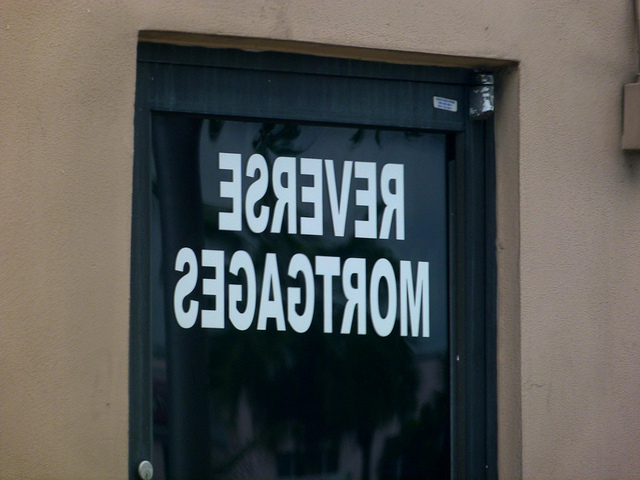
Illinois Supreme Court Upholds Right of Rescission for Trust in Reverse Mortgage Foreclosure

7977458089_2bc01df399_zThe federal Truth in Lending Act provides that in all consumer credit transactions involving a retained security interest in the principal dwelling of the borrower, the lender is required to provide the borrower with certain disclosure statements. If those disclosures aren’t made, the consumer may rescind the transaction for up to three years.

In Financial Freedom Acquisition, LLC v. Standard Bank & Trust Co., the Illinois Supreme Court addressed the question of whether the TILA right of rescission extended to a bank holding property as a trustee as a result of a reverse mortgage. In a unanimous opinion by Justice Burke, the Court held that the answer was “yes.” Our detailed summary of the underlying facts and lower court holdings in Financial Freedom is here.

Financial Freedom began in 2009 when a homeowner and the defendant entered into an “adjustable rate home equity conversion mortgage” – a reverse mortgage – secured by the homeowner’s condominium. The mortgage stated that the defendant bank was executing the instrument solely as a trustee, and would not have any liability whatsoever on the note. The note provided that the loan became immediately due in full if the borrower died, sold the property, or failed to use it as her principal residence for 12 months.   The homeowner received the necessary TILA disclosures, but she never delivered them to the defendant bank as trustee.

The homeowner died in early 2010. A few months later, the plaintiff sued the defendant bank to foreclose the mortgage. The defendant responded by sending a notice of rescission. A month later, the defendant filed a counterclaim in the foreclosure action seeking rescission, statutory damages and attorneys’ fees. The plaintiff successfully moved to dismiss the counterclaim, and the defendant appealed. A divided panel of the Appellate Court affirmed the dismissal, holding that the defendant bank was not an “obligor” under TILA and therefore had no right to rescind.

The Supreme Court reversed. The Court noted that the US Supreme Court has stated that the Federal Reserve Board’s interpretations and Staff Commentary on TILA are entitled to considerable deference from the courts. Although Section 1635 of TILA states that the right to rescind is in the “obligor,” Regulation Z and the Official Staff Commentary suggest that Congress intended something broader than the usual definition of an “obligor” – both the regulation and commentary refer to “a consumer” as being allowed to rescind. When administrative authority over TILA was recently moved from the Federal Reserve Board to the Consumer Finance Protection Bureau, Congress made no attempt to correct the applicable regulations or commentary, suggesting that it accepted the interpretation.

Besides, there was no “obligor” in the usual sense of the term in a reverse mortgage, the Court pointed out. Consumers make no payments on a reverse mortgage at all; it is a nonrecourse credit transaction secured by the consumer’s principal dwelling. Thus, if the right to rescind is limited to the “obligor” defined in the usual way, then there is no right to rescind at all in reverse mortgages.   Therefore, the Court held that the right to rescind extended to “each consumer whose ownership interest is or will be subject to the security interest.”

Such a definition plainly extended to land trusts in reverse mortgages, the Court found. Upon execution of a reverse mortgage, the land trust is the only entity which holds a property interest in the subject dwelling. The consumer’s only interest is a personal property interest in the trust. It is the trustee’s interest, not the consumer’s, which is subject to the security interest. Therefore, the defendant bank had the right to rescind the transaction.

In the alternative, the plaintiff argued that the defendant’s right to rescind had terminated upon the sale of the property, citing section 226.23 of Regulation Z (12 CFR § 226.23(a)(3).) But Section 226.23 only imposed a time limit for exercising the right to rescind, the Court concluded. So long as notice of rescission was given before sale of the property – which it was in this case – the rescission was effective.

The Court remanded the action back to the Circuit Court for consideration of the defendant’s claim for statutory damages.

Image courtesy of Flickr by Rusty Clark (no changes).

LexBlog