Illinois Supreme Court Appears Skeptical of Claim School District Exempt from Zoning

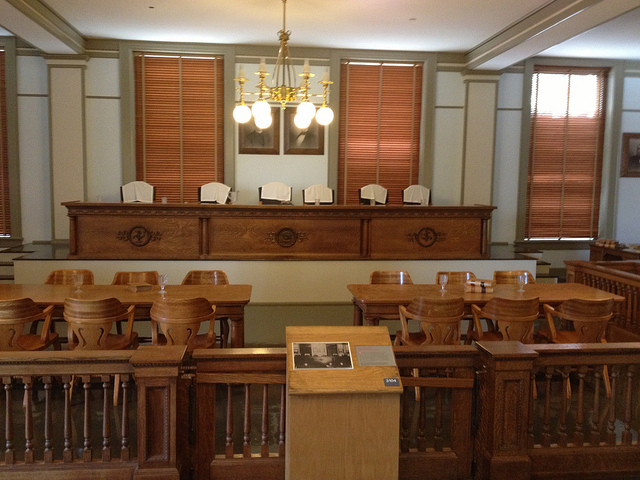
16497127793_0e93b0b7cd_zDuring its May term, the Illinois Supreme Court heard oral argument in Gurba v. Community High School District No. 155, a decision from the Second District which poses the question: are school districts subject to local zoning? Based upon the questioning patterns in oral argument, the Court appeared skeptical of the school district’s claim. Our detailed summary of the facts and lower court opinions in Gurba is here.

Gurba began when the defendant school district replaced the bleachers at the high school football field. The City issued a stop-work order against the School Board and the plaintiffs sued, seeking to privately enforce various zoning and stormwater ordinances. The parties filed cross-motions for summary judgment, and the trial court found for the plaintiffs, determining that the school district was indeed subject to the local zoning ordinances. The Appellate Court affirmed.

Counsel for the school board began the argument, arguing that the Appellate Court had erred by departing from a line of authority settling the power of the General Assembly over school districts. The Appellate Court had come up with its own definition of public education, counsel argued. As a constitutional matter, public education was committed to the General Assembly, and it was beyond the province of the courts to determine what public education should look like. Nevertheless, the Second District had decided for itself what was and was not public education, and had applied their definition narrowly throughout. Justice Freeman asked whether the Court’s decision in Board of Education of School District No. 150 v. City of Peoria was dispositive. When counsel said yes, Justice Freeman asked whether the issue was if health and safety ordinances are enforceable against school districts. Counsel responded that the City of Peoria court had reserved that issue, but all the analysis behind the decision was dispositive. Justice Burke asked how local zoning laws are similar to the tax laws in City of Peoria. Counsel answered that they are actually more oppressive. Justice Burke asked whether there is a conflict between the zoning laws and the School Code. Counsel said that whether or not there’s a direct conflict, the point is this. It is up to the General Assembly to delegate jurisdiction over schools’ buildings and grounds. But the legislature didn’t delegate authority to municipalities to enforce zoning. Justice Thomas suggested that if the Court agrees with the defendant, schools can just ignore local zoning and storm water management regulations. Counsel answered that the nature of the property being used drives the results. The school district is immune from any regulation not authorized by the General Assembly. Justice Thomas noted that the bleachers at issue are double the size of the structure they replaced – could a twenty-story building be built if it was for school purposes? Counsel said yes, if the school district could convince the superintendent to approve it. The Chief Justice asked whether a school could decide to start raising livestock in the middle of a town if they had an animal sciences class, and counsel said yes, if the regional superintendent approves. Counsel pointed out that there’s an agricultural high school on the south side of Chicago. Justice Thomas asked whether the home rule cases affected counsel’s argument. Counsel answered that matters committed to the General Assembly fall outside home rule. Nevertheless, applying the usual home rule test led to the conclusion that the zoning rules didn’t apply. Justice Theis pointed out that the General Assembly had given school boards the authority to affirmatively seek zoning changes – that seemed to suggest a relationship between the school board and zoning laws. Counsel answered that that was a power to petition the zoning board, not a duty. The City’s position would undo that provision and make the relationship with the zoning boards into a duty. Justice Theis suggested that school boards aren’t beyond the zoning laws, since the Code appeared to have in mind that school boards would sometimes seek zoning changes. Counsel explained various ways in which the power could be used, including with respect to property not being used for school purposes and as a condition of granting permission to encroach on a right of way. But whether or not the municipalities could unilaterally impose zoning over the school board’s objection was another issue.

Counsel for the regional superintendent followed, arguing that the Second District’s decision left her client with no indication of how to handle these matters. Justice Burke asked whether the City was notified of the bleachers before construction. Counsel answered that the right to notice required an affirmative step from the city. Once the City tells the superintendent that it’s interested in the construction project, the superintendent must notify the jurisdiction of all actions. Justice Burke asked whether the school board had a reciprocal duty to notify the City of projects without awaiting an expression of interest. Counsel answered that the School Code doesn’t impose a duty to inform the City in the first instance. The first duty is imposed by the School Code on the City, not the school board. Justice Burke asked whether the City had given any indication of interest. Counsel said no.

Counsel for the City followed, arguing that while the General Assembly has plenary power over schools, the Constitution had not released school districts from complying with the School Code or “any other laws.” Those include zoning. The School Code expressly authorizes school boards to seek relief from those laws through the standard zoning process. The state Life Safety Code and review by the superintendent don’t supplant zoning, counsel argued. The Chief Justice asked whether affirming might involve a risk that parochial concerns might interfere with state control over education. Counsel said no, the kinds of issues which arise in land use disputes are not the sort of policies dictated by the General Assembly. The zoning process looks at land use from a perspective of adverse impact to outside properties – that’s not an issue accounted for in the School Code. Counsel argued that home rule was an unnecessary distraction – the case could be resolved by looking at the statutes and division of authority between schools and municipalities. But if the analysis reached the Stub Hub home rule factors, counsel argued, the case was clearly right decided. The problem is local, counsel argued; the essential character of zoning is local. The General Assembly could have placed zoning on a statewide level, but it didn’t. Counsel argued that education can’t flaunt its importance by poking every neighbor in the eye.

Counsel for the local landowners was next, and argued that the question presented was whether an adjacent landowner could be totally denied due process. If the issue truly was one of first impression, counsel argued, why hadn’t the school district brought a declaratory judgment action? Why hadn’t they given the property owners an opportunity to act?

Counsel for the school district concluded in rebuttal, arguing that there was a timely process which the City could have invoked if it had chosen to. The landowners’ rights weren’t being decided in the litigation, counsel argued. Anyway, the landowners’ objections were intensely local, and that is why the State couldn’t allow municipalities to regulate state-wide concerns over education. Ultimately it is up to the General Assembly to decide whether schools must comply with zoning, and they haven’t done so. Justice Kilbride asked whether there was any provision in the School Code saying zoning doesn’t apply. Counsel said no, but that’s not the issue. The state school board and the School and Life and Safety Codes govern school construction, subject to the superintendent’s approval. Justice Thomas asked whether the superintendent was taking the position that as long as all the parts of the application are in line, the superintendent is required to approve the application. Counsel answered yes. Justice Thomas suggested that counsel seemed to indicate that that process is a protection to the homeowners – where was the protection? Counsel explained that the issues of size and setback are addressed in the Health Life Safety Code. The Code says that the permissible height and size of the bleachers is unlimited. The Superintendent is also required to consider the location of the project in relation to the neighboring property. If the City had participated in the process, they could have said that the bleachers were much too close to the other property lines.

We expect Gurba to be decided in three to four months.

Image courtesy of Flickr by D. J. Bustos (no changes).

Florida High Court to Decide Two Cases Involving Arbitration Agreements

Dardis

Two cases are currently pending in the Florida Supreme Court regarding whether the arbitration agreements at issue in the cases are enforceable.

Hernandez v. Crespo (No. SC15-67)

In this case, the Court must decide whether an arbitration agreement violates the public policy pronounced by the Florida Legislature in the Medical Malpractice Act, chapter 766, Florida Statutes (2012), when the agreement fails to adopt the necessary statutory provisions.  To conclude that the arbitration agreement at issue violated public policy, the Fifth District in its opinion relied on the Supreme Court’s decision in Franks v. Bowers, 116 So. 3d 140 (Fla. 2013), which states:  “Because the Legislature explicitly found that the MMA was necessary to lower the costs of medical care in this State, we find that any contract that seeks to enjoy the benefits of the arbitration provisions under the statutory scheme must necessarily adopt all of its provisions.”  The Fifth District reversed the order of the trial court compelling binding arbitration per the arbitration agreement at issue, and certified conflict with Santiago v. Baker, 135 So.3d 569 (Fla. 2d DCA 2014).

The parties have finished their briefing and the Florida Supreme Court will decide the case without oral argument.

Mendez v. Hampton Court Nursing Center, LLC (No. SC14-1349)

In this case, the Court must decide whether a nursing home resident is bound by an arbitration clause in a nursing home agreement when the agreement was signed by the resident’s son as the resident’s representative.  The Third District found that the resident was bound by the arbitration clause.  To view the Third District’s opinion, click here.

The facts are as follows.  The day Juan Mendez, Sr. was admitted to a nursing home, a doctor determined that he lacked the capacity to give informed consent or make medical decisions for himself.  Consequently, Mr. Mendez’s son, who was not acting under a power of attorney, signed the nursing home agreement as his father’s representative.

Mr. Mendez remained at the nursing home for more than four years, until his death.  During his stay, one of his eyes had to be removed due to an infection.  The resident’s son brought a suit against the facility on behalf of this father. The facility moved to compel arbitration under the nursing home agreement. The son asserted that the arbitration clause was not binding on his father, who was not a party to the agreement.  The trial court compelled arbitration and an appeal followed.

The Third District affirmed the trial court’s decision.  It first noted that arbitration is a favored means of dispute resolution and arbitration provisions are generally favored by the courts. It also noted that arbitration clauses are binding on third-party beneficiaries, even when the third-party beneficiary did not sign the contract.

The Third District therefore found that Mr. Mendez was not merely an incidental beneficiary of the agreement; he was the intended and actual third-party beneficiary. As a third-party beneficiary to the agreement, he was bound by the arbitration provision.

The Third District also noted that other district courts have held that nursing home residents who are non-signatories to care agreements are not bound by the arbitration provisions in those agreements.  The Third District disagreed with the reasoning in these decisions.  It declared that whether a third-party beneficiary is bound by an arbitration provision does not depend on whether the signatory signs only as the “financially responsible” party or has the authority to agree to arbitration, but depends on whether the resident accepted the benefits of the agreement.

This article will be updated once the Florida Supreme Court decides these cases.

Image courtesy of Flickr by NobMouse (no changes).

Florida Supreme Court Considers Agency Review Requirements for Involuntary Admission of Developmentally Disabled Individuals to Residential Services

8471515526_dcca9ba4b1_z (2)

On May 14, 2015, the Florida Supreme Court answered the following two questions in the negative, which were certified to it by the Eleventh Circuit Court of Appeals:

  1. Does “support plan” review under Fla. Stat. § 393.0651 require the Agency for Persons with Disabilities to consider the propriety of a continued involuntary admission to residential services order entered under Fla. Stat. § 393.11?
  2. Is the Agency for Persons with Disabilities required, pursuant to Fla. Stat. § 393.0651 and/or Fla. Stat. § 393.11, to petition the circuit court for the release from an involuntary admission order in cases where the APD determines that the circumstances that led to the initial admission order have changed?

See J.R. v. Palmer, No SC13-2416. The supreme court declined to answer the third certified question. To view the 11th Circuit’s opinion, click here.  To read the supreme court’s opinion, click here.

In 2004, J.R., a 48 year-old man with an IQ of 56, was involuntary admitted to residential services administered by the Agency for Persons with Disabilities, a part of the Department of Children and Family Services, after he was charged with sexual battery and found incompetent to stand trial.  Upon his admission, J.R. was given a support plan.

In 2011, J.R. sued Michael Hansen, the Director of APD, challenging the constitutionality of the statutes regulating his involuntarily admission.  J.R. contended that Chapter 393, Florida Statutes violated his due process rights because it does not provide for periodic review of an involuntary admitted resident’s continued confinement by a decision-maker who has the authority to release the resident. The dispute centered around the constitutionality of sections 393.11 and 393.0651, Florida Statutes.  Section 393.11 governs the involuntary admission of developmentally disabled individuals to residential services.  Section 393.0651 governs support plan review for clients enrolled in the Agency services.  A client may challenge his or her support plan in an administrative proceeding, but the presiding hearing officer has no authority to change the involuntary admission order.

The Florida Supreme Court answered the first and second certified question in the negative. The Court answered the first question in the negative because support plan review under section 393.0651 does not require the Agency to consider whether an involuntary admission order entered under section 393.11 continues to be appropriate.  Section 393.0651 provides a comprehensive scheme regarding annual support plan review for Agency clients, but nothing within the text of the statute can be construed to include consideration of the elements that must be established for involuntary commitment.

The second question was answered in the negative because the Agency is not required, under either section 393.0651 or section 393.11, to petition the circuit court for a person’s release from an involuntary admission order in cases where the Agency determines that the circumstances that led to the initial admission order have changed.

The Court declined to answer the third certified question because it asked the Court to interpret federal law. Specifically, the third certified question asked the Court to analyze Chapter 393 in light of federal constitutional case law and effectively resolve J.R.’s underlying federal constitutional claim.

Justices Pariente and Canady dissented.

Image Courtesy of Flickr by Matt Spence (no changes).

Illinois Supreme Court Debates Fate of Tobacco Verdict

166215927_48b7336d26_zDuring the May term, the Illinois Supreme Court heard oral argument in Price v. Philip Morris, Inc., the second appeal from a massive $10.1 billion consumer fraud verdict. Price poses the question of how much discretion a trial court has on a motion to set aside a verdict based upon new and different circumstances. Our detailed summary of the facts and lower court opinions in Price is here.

The plaintiff filed a putative class action under the Illinois Consumer Fraud and Deceptive Business Practices Act, alleging that the defendants had violated the statute by advertising certain cigarettes as “light” and “low tar.” In 2003, the court entered its multi-billion dollar verdict for the plaintiffs. In 2005, the Illinois Supreme Court heard Price for the first time, reversing the judgment on the grounds that the defendant’s conduct was “specifically authorized” by the Federal Trade Commission.

Two years after the Supreme Court’s judgment became final, the FTC filed an amicus brief in an unrelated case saying that it had never intended to specifically authorize the use of such terms. Not long after, the FTC issued a “rescission of guidance” revoking a 1966 document relating to permissible statements in advertising and packaging about tar and nicotine. Ten days after the rescission of guidance was issued, the plaintiffs in Price filed a petition for relief from judgment seeking to overturn the judgment entered in defendant’s favor after the verdict became final. The trial court dismissed the petition as untimely, but the Fifth District reversed. On remand, the trial court held that it was more likely than not, if the FTC’s new actions had been available at the time of trial, that the defendant’s Section 10b(1) defense would have failed. Nevertheless, the Circuit Court denied the petition, but the Fifth District reversed once again.

Counsel for the defendant split the argument. Lead-off counsel began by arguing that the Court’s judgment in Price I was correct. The plaintiffs’ motion for relief from that judgment was filed more than two years after the Supreme Court’s judgment and mandate. The plaintiffs argued that their motion was timely because it was filed within two years of the final order from the trial court, but counsel argued that making that order the trigger would exalt form over substance. The trial court’s order was a purely ministerial act carrying out the Supreme Court’s judgment, counsel argued; therefore, the operative judgment for purposes of the statute was that of the Supreme Court. Neither the FTC amicus brief nor the rescission of guidance had been in existence at the time of trial, counsel noted. Therefore, under traditional rules justifying new trials based on new evidence, neither was sufficient. Besides, counsel argued, the argument to set aside based on the rescission of guidance had been waived. The first time the plaintiffs had raised the matter was on their petition for rehearing. At no time during trial had the plaintiffs asked the FTC for its view on the case. Neither the amicus brief nor the rescission of guidance had challenged the Court’s opinion in Price I – far from it. The FTC had distinguished Price I in its brief. What if the judgment were reinstated, but when the FTC commissioners changed yet again, the Commission reversed its guidance, counsel wondered – could the defendant restart the process yet again? Surely, counsel concluded, litigation was not a game of musical chairs.

The second counsel for the defendant followed, arguing that the Court should decline the invitation to overrule a ten year old decision. Counsel argued that the FTC’s statement in 2008 that it had never authorized the defendant’s conduct was not newly discovered evidence; that term has never included legal arguments, as opposed to extrinsic truths that can be proven. Whether or not the conduct was authorized was not an objective fact which the FTC either observed or experienced. The FTC’s 2008 statements didn’t show that Price I was wrong, counsel argued; no court has ever overruled itself based on an agency amicus brief. Counsel argued that the class contained countless smokers with no claim of having been deceived; plaintiffs’ evidence demonstrated that the class includes people who would have bought the cigarettes anyway. Counsel argued that although plaintiffs claimed that every smoker in America thought “lights” were safer, their own survey says the opposite. Counsel argued that if smokers would have bought the cigarettes anyway, then there is no claim because there is no causation. Moreover, plaintiffs failed to prove any financial injury, according to counsel. A financial loss cannot exist unless the market places some value on the allegedly misrepresented feature. But here, counsel argued, the record showed that the market placed no value on the health attributes of light cigarettes. Therefore, plaintiffs had no damages.

Counsel for the appellee argued next. Counsel argued that in Price I, the issue of authorization had come up when the defendant offered evidence about the FTC’s intent. Chief Justice Garman asked what authority the plaintiff could cite for allowing a lower court to set aside the judgment of a higher court. Counsel argued that had happened before when information brought to the Circuit Court’s attention had changed the outcome. The purpose of a Section 2-1401 motion to set aside the judgment is to achieve the proper income, counsel argued. The Chief Justice asked whether there was anything to prevent such a motion from being filed in the Supreme Court. Counsel responded that the motion had to be filed in the trial court. It was the defendant who asked that the final judgment be filed in the Circuit Court, plaintiff argued. There was no question that if the Court had known about the FTC amicus brief, it would have discounted the testimony of defendant’s expert, according to plaintiff. Justice Burke asked whether the motion could have been filed at the Supreme Court as a motion to recall the mandate. Counsel answered that a final judgment had been entered at the trial court on the Supreme Court’s instructions at the defendant’s urging. The Chief Justice suggested that according to the plaintiff’s view, the Circuit Court could wait years and extend the period for entering judgment indefinitely. What about the finality of judgments? Counsel responded that the delay was a result of a rehearing petition followed by a cert petition. So to the extent the court was troubled by the idea of a trial court sitting on the matter for a year, this wasn’t the case to opine on that. Counsel argued that the defendant is making a distinction between points of fact and law on a motion to set aside, but the court has rejected that distinction, holding that ineffective assistance of counsel is a valid reason for a motion to set aside. Nor does the distinction between facts and newly discovered evidence exist, counsel argued.

The class survey defendants cited was done several years after the class was certified, according to plaintiff. Counsel argued that the defendant ignored the standard of review on damages. The proper test was for the benefit of the bargain. The issue was comparative valuation – did the person get what he or she bargained for? Counsel argued that the record lacked a safe cigarette comparator because of the defendant’s alleged distortion of the market. The light cigarette was essentially worthless, counsel claimed, and there were $7.6 billion worth of purchases in the state. Counsel insisted that the only people not yet compensated were the state’s consumers.

Counsel for the defendant argued in rebuttal that there was nothing in the statute saying where a party must file the petition to set aside. The statute says that the petition must be filed two years after filing of the judgment “from which relief is sought.” The plaintiffs were arguing that the Supreme Court made a mistake, not the Circuit Court, counsel argued. Counsel argued that the Court would be the first state to ever hold that getting the law wrong is sufficient grounds to revisit a judgment. The defendant wasn’t asking for herculean efforts, according to counsel – the plaintiff could have simply made a phone call to the FTC. As for causation, was the plaintiff contending that every member of the class relied on health issues to purchase every single time? The price of light cigarettes had never dropped – the market placed no premium on the cigarettes. Accordingly, no internet survey could possibly justify a finding of damages. Counsel argued that there was no evidence that the defendant had manipulated the market to ensure that regular and light cigarettes cost the same; all kinds of purportedly healthy products were not priced at a premium by the market. Counsel concluded by arguing that the classwide judgment had never been about compensating the people of Illinois for any economic injury.

We expect a decision in Price in three to four months.

Image courtesy of Flickr by SuperFantastic (no changes).

Illinois Supreme Court Debates Claims Against Condo Developer

389145881_51ca090bb2_zDuring its May term, the Illinois Supreme Court heard oral arguments in Henderson Square Condominium Association v. LAB Townhomes, a case posing several related questions about the scope of a developer’s tort duties in connection with a several-years-old building. Our detailed summary of the facts and lower court holdings in Henderson Square is here.

The plaintiffs sued various developers and individuals involved in a condominium development, alleging that the defendant had entered into a contract to develop the mixed use project in the City of Chicago. Plaintiffs allege that defendants began to market individual units in 1996, selling units through a form sales contract. After the owners began to occupy the units, certain units began to experience water damage. The Board retained a restoration consultant to investigate; the consultant concluded that the workmanship issues would be very difficult, if not impossible, to remedy without substantial reconstruction of the units. A contractor confirmed the extent of the alleged defects, as well as concluding that the defects couldn’t have been discovered without extensive testing and partial demolition of the units.

The plaintiffs sued for (1) breach of the implied warranty of habitability, (2) fraud, (3) negligence, (4) breach of Chicago Municipal Code Section 13-72-030, and (5) breach of fiduciary duty. The defendants moved to dismiss counts I-III as time-barred. The trial court agreed and dismissed those claims. The plaintiff filed an amended complaint, and the trial court dismissed on defendant’s motion. The Appelate Court reversed.

Counsel for the developer began the argument by telling the Court that the case was about a stale construction defect claim gussied up to survive the ten year construction defects statute of repose. The Appellate Court relied upon the exception for fraudulent concealment of a cause of action to justify resuscitating the plaintiffs’ claim fifteen years after construction was completed. But fraudulent concealment must be specifically pled, counsel argued – plaintiffs must allege an affirmative act which was intended to and did in fact prevent the plaintiff from finding its injuries and filing suit. But here, counsel argued, plaintiffs didn’t even claim that defendants had done anything to prevent or lull the plaintiffs from filing timely. The Appellate Court appeared to have suggested that where the plaintiff pleads a fiduciary relationship, there is no need for pleading an affirmative act. Justice Thomas asked whether counts 4 and 5 were construction related or not, such that the construction statute of repose would apply. Counsel answered that whether the Section 13-214 statute of limitation applied was not before the Court – the plaintiff had not argued below that the case wasn’t subject to the construction statute of limitations. Justice Thomas suggested that there was authority holding that the nature of the liability dictates which limitation period applies, so it was important to know what the Appellate Court had found. Counsel answered that the exception should be strictly construed, requiring affirmative facts or a relationship that in fact operated to prevent discovery. Instead, plaintiffs had focused in part upon the preconstruction brochure. But, counsel argued, given the disclaimers required by law, it was difficult to see how those representations could be false. Justice Thomas suggested that counsel was arguing that plaintiffs knew about their cause of action when the water leaks appeared, but that the insulation issues had nothing to do with the leaks. Was there any inconsistency there? Counsel said no – the infiltrating water was sufficient to trigger inquiry notice, but the insulation wasn’t intended to prevent water leakage. The insulation was on the third floor, while the water leaks were in garden basement units. Counsel noted that the second misrepresentation relied upon by plaintiff was the reserve budget, but it was impossible to see how that could either conceal the cause of action or talk anyone out of timely filing. The Chief Justice asked whether a fiduciary could ignore future problems on the grounds that they wouldn’t manifest until after the fiduciary relationship ended. Counsel responded that whether or not there was an appreciable risk didn’t make the matter a material misrepresentation. Justice Thomas asked whether those were questions of fact like the statements that allegedly lulled the plaintiffs into not pursuing their claims. Counsel answered that if plaintiffs were going to invoke the fiduciary relationship, they must allege what happened that lulled them into doing nothing.

Counsel for the homeowners followed. Justice Theis read the City’s Condominium Ordinance and asked whether the claim was about the construction, or was fraud/misrepresentation. Counsel answered that the claim went to the marketing of the units – the defendant had claimed that the building had a quality it didn’t have. Justice Theis asked if the claim was subject to the construction statutes of limitation and repose. Counsel responded that the plaintiffs have always argued that the breach of fiduciary duty claims are subject to the five-year statute. The claims weren’t construction-related, but they weren’t for fraud either. Counsel argued that the plaintiffs had always claimed that the five-year statute applied, but both courts had held that the claims were construction related. The claim wasn’t just about cutting corners or omitting insulation, counsel argued. Justice Thomas asked if there was any allegation in the complaint of when the plaintiffs knew of the water leak. Counsel answered that plaintiffs had learned of the leaks in later 2007 or early 2008. But insulation was only one problem with the building. Justice Thomas asked counsel to explain the link between the insulation and the source of the water. Counsel answered that the homeowners had brought in a contractor after the water leaks appeared, who had ultimately found the problems with the missing insulation. Counsel argued that the plaintiffs had alleged a whole stream of deceptive conduct.   Although the defendant argued that it was unreasonable to rely on misrepresentations in the owners’ owners’ packet, the whole point was that plaintiffs should have relied on their fiduciary. There was no reason to investigate between the water leaks given the defendant’s reputation, counsel argued. The homeowners had discovered the leaks in 2007-2008, but didn’t know about the further problems until they hired a contractor in 2009. They didn’t know the full dimensions of the problem until 2011. Justice Burke said that the Appellate Court had apparently believed that any false statement was actionable under the Municipal Code. Counsel said that the issue would have to be decided on a case-by-case basis. Amici had suggested that puffery would be covered by the Appellate Court’s standard, but counsel suggested that such statements would always be protected because a statement had to be false as a matter of fact. Justice Burke asked whether any false statement was sufficient, or it had to be a material statement. Counsel answered that any false statement was sufficient.

Counsel for the developer concluded in rebuttal, arguing that affirmance would amount to a substantial policy change, increasing consumers’ legal and medical costs. The plaintiffs argued that mere deceptive conduct was sufficient, but they didn’t come close to the Supreme Court’s standard for fraudulent concealment, counsel argued. That required facts sufficient to operate to prevent the plaintiff from bringing the claim. The unit owners had been complaining for years about water infiltration, and yet the homeowners hadn’t sued. Justice Kilbride asked when the problems first became widespread, and counsel answered that he wasn’t sure they ever had – the leaks didn’t go beyond the four garden units. Justice Kilbride asked if the report following the 2007/2008 leakage issues indicated widespread problems. No, counsel answered. Justice Theis asked counsel to address the Supreme Court’s 2014 decision in Gillespie Community Unit School District No. 7 v. Wight & Co.. Counsel answered that that if the fraudulent concealment exception to the statute of limitations applies, then Gillespie would dictate that the five-year statute of limitations applies. Justice Theis asked whether Gillespie was helpful in determining whether the claims were construction related. Counsel responded that he wasn’t sure it was – Gillespie had involved a school. Counsel concluded by arguing that the planning phase of a project was clearly subject to the construction statute of limitations. A developer put together a statement and set a budget – and all that was planning within the construction statute. Justice Thomas asked which statute applied to the City Ordinance. Counsel answered that if the construction statute of limitations doesn’t apply, then the residual statute would. Counsel concluded by arguing that even if the plaintiffs had no duty to investigate before the water leaks occurred, they certainly had a duty to do so afterwards.

We expect Henderson Square to be decided in four to six months.

Image courtesy of Flickr by John Zacherle (no changes).

Illinois Supreme Court Debates Constitutionality of Foreclosure Filing Fee

3899715321_797047dc69_zDuring its May term, an apparently skeptical Illinois Supreme Court heard oral arguments in Walker v. McGuire, a constitutional challenge to a fee (735 ILCS 5/15-1504.1) on foreclosure filings to support a state foreclosure prevention program.

Walker began when the plaintiff paid the fee and filed suit for a refund, challenging the constitutionality of the fee on a variety of grounds: that it created a fee office within the bar of Article VI, Section 14 of the state constitution, that it unreasonably benefited the City of Chicago and that it created an unreasonable classification. The Illinois Attorney General intervened and moved to dismiss.

The Circuit Court struck down the statute as a violation of the fee office provision because it required the Circuit Court Clerk which administered the fee to retain 2% of the funds. The Attorney General appealed directly to the Supreme Court, and the plaintiff cross-appealed on the grounds that the Court had ruled only on the original form of the statute before it was amended in 2013.

Counsel for the State began the argument, saying that the issue before the Court was narrow: whether the pre-amendment form of the statute created a fee office under Article VI. Because the challenge was to the statute on its face, the Circuit Court could only be affirmed if the Court concluded that the statute wasn’t valid under any circumstances. Counsel argued that the Circuit Court erred because Section 14 of Article VI doesn’t apply to Circuit Court clerks – read in context, it refers to adjudicatory personnel (judges and magistrates) alone. The history of the provision reflects a desire to bar persons involved in litigation from having a financial interest. But even if the provision did apply to the Clerk, the statute would still not amount to a fee office. Justice Burke asked whether the Court’s precedents require 100% of the fees collected under the statute to be distributed to others, and counsel explained that all that was required is that funds from the fee be used for some purpose related to the court system. Justice Theis pointed out that the plaintiff appeared to be saying that even placing a small part of the fee receipts in the Clerk’s operations fund ran afoul of the fee office provision. Counsel argued that there was no basis for that, since merely retaining a small portion to defray expenses doesn’t create a litigation conflict of interest. Justice Burke asked what standard the Court should apply to reviewing the plaintiff’s claim that the statute violated Article I, Section 12, which guarantees all Illinoisans’ right to “obtain justice by law, freely, completely, and promptly.” Counsel argued that only a rational relationship was needed. Justice Theis asked whether that issue was even before the Court, and counsel said no – since the lower court hadn’t decided the due process or equal protection challenges, neither issue was before the Court. Counsel reviewed the timeline of the case, and pointed out that the lower court had strictly limited its finding of unconstitutionality to the pre-amendment version of the statute. Plaintiffs were seeking before the Supreme Court to challenge the version of the statute currently in force, even though they had never even sought to amend the complaint below.

Counsel for the plaintiffs followed. Justice Theis asked counsel which version of the statute he was challenging. Counsel explained that when the amendment to the statute was enacted, the Attorney General had appeared and argued that a new statute was in force, clarifying the intent of the legislature. Justice Theis asked counsel whether he filed an amended complaint after the statute was amended, and counsel responded that the trial court had said it wasn’t necessary. After the Attorney General had argued that the 2013 statute clarified and supplemented the earlier version, the only statute before the court was the 2013 version. Justice Theis pointed out that the lower court had not engaged in any way with the 2013 version in its order; counsel answered that the court had asked for briefing on the impact of the 2013 amendment, and he thought it was error for the Circuit Court not to extend its order to that version of the Act. That issue was the subject of the plaintiffs’ cross-appeal.  Justice Thomas asked counsel whether he had a standing problem in challenging the 2013 statute; counsel responded that no standing objection had ever been raised. The plaintiffs had attacked the entire concept of fees being applied outside of the court system – they were attacking the 2011 statute, as amended in 2013. Justice Theis suggested that the plaintiffs hadn’t really responded to the State’s argument that the fee office clause is limited to adjudicatory officers. What was the plaintiff’s definition of a fee office? Counsel pointed out that Article IX bars all fee offices. Justice Theis asked why the issue wasn’t limited to Article VI, since the clerks were part of the judicial branch. Counsel answered that the State’s claim that the bar on fee offices was limited to adjudicatory officers made the final sentence of the Section surplusage – clerks are part of the judicial system, and the clause says there can be no fee offices in the judicial system. When counsel once again suggested that the clerks were also covered by Article IX, Justice Theis pointed out that the general ban on fee offices found in Article IX addresses local governments. Counsel argued that the language wasn’t so restrictive. Justice Theis asked whether the fee office clause was violated if the clerk put a portion of the fee in its operations fund. Counsel answered that where the money goes isn’t the issue – it’s where the money comes from. Justice Theis asked whether Crocker v. Finley, one of the principal cases on which the plaintiff relied, required strict scrutiny of the Act. Counsel answered that it did not, but other cases made it clear that the issue of free access to the courts was reviewed under strict scrutiny. Nevertheless, even if the standard was rational basis, the Act was unconstitutional, according to counsel. The Act was a general revenue raising measure, but the constitution clearly barred using court funds for a general welfare purpose. Justice Karmeier asked whether the Court wasn’t really dealing with a narrow holding that the pre-2013 version of the statute was a fee office under Article VI, Section 14. Counsel answered that since the remaining challenges to the statute had been fully briefed, the Court could address those as well. Justice Thomas asked whether the record supported the plaintiffs’ view that the lower court had always intended to address the post-amendment version of the statute. Counsel answered that the record reflected the court’s request that the parties brief the 2013 statute, as were the parties’ briefs themselves.

The State’s counsel pointed out in rebuttal that nothing in the statute created a fund or a program; the 2% hold-back was for implementation of the section of the statute, not implementation of the foreclosure program. Counsel argued that there was nothing in the record to suggest that the lower court had mistakenly forgotten to address the post-amendment version of the statute. Counsel concluded by arguing that the general fee office bar in Article IX was inapplicable to the statute, since Circuit Court clerks are not local officials.

Counsel for the plaintiffs concluded the argument with rebuttal on the cross-appeal. He argued that Circuit Court Clerks are paid and elected locally. Justice Theis suggested that counsel was addressing the fee office issue rather than his cross appeal. Counsel disagreed, arguing that the statute was still infirm, even post-amendment. Justice Theis pointed out that the Court had been asked not to rule on the plaintiffs’ cross-appeal on the grounds that the only basis for the Circuit Court’s holding striking down the statute was that it violated the judicial fee office clause, Article VI, Section 14. Counsel answered that the issue before the Court was whether the order below was proper, and the Court could consider any argument in support of the lower court’s order.

We expect Walker to be decided in three to four months.

Image courtesy of Flickr by Taber Andrew Bain (no changes).

Illinois Supreme Court Debates Vesting of Pension Health Care Benefits

3872192286_afb40f2b92_zLate in its May term, the Illinois Supreme Court heard oral arguments in Matthews v. Chicago Transit Authority, which poses the question of whether the health care benefits of Chicago Transit Authority employees and retirees are vested, and therefore immune from reduction. Our detailed summary of the underlying facts and lower court holdings in Matthews is here.

The complaint in Matthews set forth two classes of plaintiffs: CTA employees hired before September 2001 who retired before January 1, 2007, and employees hired prior to September 2001 who either retired in 2007 or later, or remain active employees. The complaint purports to allege claims for breach of contract, violation of the state Constitution’s pension clause and breach of fiduciary duty.

The pension plan defendants moved to dismiss the complaint on various grounds, including that the plaintiffs’ health care benefits were not vested, and the pension clause of the state constitution doesn’t apply to health care benefits. The CTA filed a separate motion to dismiss, arguing that it was not a proper party to the lawsuit. The trial court held that the current employees lacked standing, and dismissed the remainder of the action for failure to state a claim. The Appellate Court affirmed in part and reversed in part, holding that current employees lacked standing, but that retirees had a viable claim against the CTA for promissory estoppel and declaratory judgment. Following the decision of the Third District in Marconi v. City of Joliet, the Court held that health care benefits were presumptively vested, and that nothing in the agreements overcame that presumption.

Counsel for the CTA began the argument. Counsel argued that the parties’ agreements clearly provide that pension benefits are vested, but other contract benefits are subject to modification. The presumption applied by the Appellate Court turned well-settled principles of contract law on their head, counsel argued. The Court has made clear in Heaton and Kanerva, according to counsel, that the pension protection clause protects the contract the parties entered into, not benefits per se. Counsel concluded by briefly addressing the Appellate Court’s holding that plaintiffs had a viable claim against the CTA for promissory estoppel, noting that promissory estoppel against a municipality requires extraordinary and compelling circumstances not present in Matthews.

Counsel for the Retirement Plans and Trusts followed. Counsel argued that the contract is unambiguous with respect to whether retiree health benefits are vested. The Marconi decision on which the Appellate Court based its presumption ultimately derives from a Sixth Circuit decision called Yard-Man, counsel argued – but Yard-Man was unanimously rejected by the U.S. Supreme Court while briefing was underway in Matthews. When the parties to the contracts wanted to provide that rights were vested, they knew how to do it – the word “vest” is used ten times in Section 11 of the agreement, counsel argued, while Section 20 relating to health care benefits doesn’t use the word even once. Counsel noted that although the Appellate Court didn’t reach the constitutional issue, nothing in the pension protection clause prevented adjustments made through usual contract principles. Justice Kilbride asked counsel whether he was going to address the plaintiffs’ request for a remand. Counsel answered that there was no need for a remand if the Court agreed that the contract was unambiguous and health benefits weren’t vested.

Counsel for the retirees and employees was next. He asked for a ruling that current employees have standing to sue and that all pre-2001 retirees have vested rights to a paid health care benefit. Given that paid health care benefits have been part of the retirement system for thirty years, counsel argued, they cannot be diminished through collective bargaining without the agreement of all individual plan participants. Justice Kilbride asked counsel if he as saying that the union needed individual participation from each member of the plan in order to waive any rights, and counsel said yes – vested rights can be created through bargaining, but they cannot be waived that way. Justice Karmeier asked if that meant that a subsequent agreement could have no effect on the previous one. Counsel said that for current participants who had a vested right in health care benefits, the answer was no – a subsequent agreement could not waive their rights without their separate consent. According to counsel, the terms of the pension protection clause mean that all the benefits of the retirement system automatically vest whether or not the contracts specifically say so. In addition, any ambiguity must be resolved in favor of the retirement plan participant. Counsel argued that annuities and health care benefits are fundamentally different from other non-pecuniary terms of the collective bargaining agreement. Justice Thomas asked what role consideration has in all this. Counsel answered that the union could bargain over certain benefits, but couldn’t bargain away vested benefits. Therefore, counsel argued, it was not essential that the contracts specify that health care benefits vested, although he believed that the contract did indeed so provide. Counsel argued that if his current employees didn’t have standing, then logically they couldn’t have standing to protect their rights under the pension protection clause either. The unions’ obligation to defend the rights of its membership were not an adequate substitute for individual rights to redress. Justice Kilbride asked whether the relevant contracts were subject to a union ratification vote, and counsel agreed they were. Justice Kibride asked if counsel was suggesting that it would take 10,000 separate ratifications to approve what the union had negotiated. Counsel agreed that was correct, and suggested that a simple vote on the contract wouldn’t be enough – it would require an individual contractual waiver, agreeing to change an employee’s benefit in return for sufficient consideration.

Counsel for the Retirement Plans and Trusts led off the rebuttal. Counsel argued that vested rights arose from the pension protection clause, but that was the whole issue in the case – whether the rights were vested at all. The pension clause doesn’t vest anything, counsel argued – it protects a contractual relationship.   The question was whether health care benefits were vested under the parties’ agreement, and the answer was no. Counsel concluded by pointing out that in return for the changes in health care benefits, the retirees had received a cap on their premium, plus a $2.5 million infusion into the pension fund.

Counsel for the CTA began his rebuttal by arguing that health care benefits had always been subject to modification at any time. Counsel agreed with counsel for the Plans and Trusts that the pension protection clause merely protects the contract the parties entered into. Counsel noted that plaintiffs’ counsel had called for individualized consent from all 10,000 employees, but argued that that was an invitation to chaos. The retirees and employees had received fair consideration for the changes to health care premiums, counsel argued in conclusion.

We expect Matthews to be decided in three to four months.

Image courtesy of Flickr by EmilyDickinsonRidesaBMX (no changes).

Illinois Supreme Court Holds Police Pension Can’t Be Offset by Social Security in Divorce Settlement

8224573137_84fa4e6f15_zFederal law provides that Social Security benefits cannot be divided between spouses in a divorce settlement (as well as being exempt from execution, attachment, garnishment and bankruptcy distribution – virtually the only exception is spousal and child support). (42 U.S.C. § 407(a).) But if one spouse participates in an alternative pension system instead of Social Security, can a portion of that spouse’s pension be protected in the settlement to offset the other partner’s Social Security? Earlier this month in In re Marriage of Mueller, a divided Illinois Supreme Court held in an opinion by Justice Theis that the answer is “no.” Our detailed report on the underlying facts and lower court holdings in Mueller is here.

The husband and wife involved in Mueller were both employed at the time of their divorce – she in the insurance industry, he as a police officer. Although she had Social Security tax withheld from her paycheck, he participated in the police pension fund in lieu of Social Security.   At trial, the husband presented expert testimony valuing his pension. The expert offered to testify that she had included an offset, treating a portion of the police pension equivalent to her expected Social Security benefits as being exempt from division in order to place the two parties on an equal footing. The wife successfully objected to the testimony, largely on the basis of In re Marriage of Crook, in which the Surpeme Court had held that one party could not be awarded a greater share of the divisible marital property to make up for one spouse’s Social Security benefits. The Appellate Court affirmed.

In an opinion by Justice Theis, joined by Chief Justice Garman and Justices Freeman, Thomas and Kilbride, the Supreme Court affirmed. Social Security benefits are not property, the Court noted, since no participant in the system has an accrued property right to any particular benefit – the Supreme Court has said that a participant’s interest is an expectancy or a noncontractual interest which Congress can frustrate at any time. If actual Social Security benefits were not property, then certainly hypothetical future benefits – the wife being not yet retired at the time of the divorce – didn’t qualify as property either within the meaning of the Dissolution Act. The Court characterized a valuation placed on future benefits as “rank speculation.” Accordingly, the wife’s potential future Social Security benefits had to be completely disregarded in the division of property.

Justice Burke dissented, joined by Justice Karmeier. Justice Burke argued that Federal law neither expressly prohibits an offset similar to the one proposed by the husband, or that Congress had preempted the field of divorce property settlements. Nothing about the proposal threatened to reduce the wife’s future Social Security benefits at all, the dissenters claimed. Thus, the division posted no obstacle to the accomplishment and execution of Congress’ purposes and objectives in enacting Section 407(a), and preemption was not appropriate. Nor was the valuation placed on the wife’s future benefits speculative, the dissenters argued – the data had come from the Social Security administration itself.

Image courtesy of Flickr by StockMonkeys.com (no changes).

Illinois Supreme Court Affirms Order That ISP Must Identify Internet Commenter

1681924558_4af276dedb_zMay a plaintiff adapt the procedure found in Illinois Supreme Court Rule 224 to get a court order requiring an internet service provider to identify the author of an anonymous internet comment? Earlier this month, a unanimous Illinois Supreme Court held that the answer was “yes.” Our detailed summary of the underlying facts and lower court decisions in Hadley v. Subscriber Doe is here. Our report on the oral argument is here.

Hadley began with an online newspaper article describing the plaintiff’s candidacy for the county board. At the end of the article, readers could post comments. An individual posted two allegedly defamatory comments about the plaintiff, identifying himself only by a screen name. In early 2012, the plaintiff filed a defamation claim against the newspaper’s parent company.

While the case was pending in federal court, the plaintiff issued a subpoena to the commenter’s internet service provider, seeking the identity of the person assigned the IP address where the comments originated. Counsel for the commenter entered an appearance seeking to quash the subpoena, but before the motion was ruled upon, the action was dismissed.

The following month, the plaintiff filed a state-court action against the commenter, alleging defamation per se, naming him as “Subscriber Doe” and referencing his screen name. Along with the complaint, the plaintiff issued a subpoena to the commenter’s ISP, once again demanding the subscriber’s identifying information. Counsel for the commenter entered an appearance to contest both the subpoena and jurisdiction. During the hearing on the motion, the circuit court suggested that the better procedure to discover the identity of the commenter would be Supreme Court Rule 224, which authorizes the filing of an independent lawsuit to discover the identity of an unknown person potentially liable to the plaintiff. Based upon the court’s suggestion, the plaintiff filed an amended complaint, restating the defamation claim and purporting to state a second claim against the ISP under Rule 224. After additional briefing, the court concluded that the plaintiff had stated a cause of action for defamation sufficient to withstand a motion to dismiss, and ordered disclosure of the commenter’s identity. The Appellate Court affirmed, with one Justice dissenting.

In an opinion by Justice Burke, the Supreme Court affirmed. The defendant first argued that the plaintiff’s original complaint merely named the commenter by his screen name – a fictitious name – and was therefore a nullity. Because the original complaint was a nullity, there was nothing for the amended complaint to relate back to, and plaintiff was outside the statute of limitations. The Court held that although Illinois does not recognize claims against unknown Doe defendants, this was not such a claim. The commenter was known, but by his screen name rather than his legal name. The plaintiff had sued the alias of a real person.

Next, the defendant argued that Rule 224 plainly contemplates a standalone action, meaning that the plaintiff’s purported amended complaint in fact commenced a brand-new action.  Accordingly, the original complaint had been abandoned and, once again, the statute of limitations had expired. The Supreme Court disagreed. Although the Court emphasized that Rule 224 should typically be utilized before suit begins, the plaintiff had proceeded as he did upon the trial court’s express instructions, and the defendant hadn’t been prejudiced by the unusual procedure.

Next, the Court agreed with the Appellate Court’s holding that the proper test for balancing First Amendment interests against the plaintiff’s right to redress was to assess whether the complaint against the unknown defendant was sufficient to withstand a motion to dismiss. The Court held that plaintiff’s claim was sufficient – the defendant’s words were not susceptible of a reasonable construction and were reasonably understood to be an assertion of fact rather than mere hyperbole. As a result, the Court held, that trial court had properly ordered disclosure of the defendant’s information.

Image courtesy of Flickr by Valerie Everett (no changes).

Illinois Supreme Court Debates Automatic Consent Clause of Driver’s License Statute

14177200447_c384b8f4e9_zAccording to Section 11-501.6 of the Illinois Vehicle Code, any driver involved in a fatal motor vehicle accident consents as a matter of law to chemical testing. (625 ILCS 5/11-501.6.) If the driver refuses to permit the test, his or her driver’s license is automatically suspended by the Secretary of State. During its May term, the Illinois Supreme Court heard oral arguments in McElwain v. The Office of the Secretary of State, which challenges Section 11-501.6 as an unlawful search under the Fourth Amendment.

McElwain began when the plaintiff was involved in a fatal accident with a motorcycle. Although the plaintiff’s vehicle was inventoried, the plaintiff wasn’t asked to submit to chemical testing at the scene of the accident. After the inventory turned up what appeared to be marijuana in the car, the police spoke to the plaintiff again two days later and asked him to submit to chemical testing. He refused, and his license was suspended for 36 months. He filed a petition for administrative review, challenging the constitutionality of the statute. The Circuit Court sided with the plaintiff, striking down the statute.

Counsel from the Attorney General’s office began the argument, representing the Secretary of State.   Counsel argued that the case wasn’t properly analyzed under the Fourth Amendment’s special needs/exigent circumstances doctrine at all, but rather as a question of whether the condition – automatic consent – was an unconstitutional burden on the privilege of driving. The doctrine of unconstitutional conditions and the special needs exception to the Fourth Amendment are not coextensive, counsel argued; the conditions doctrine operates in civil law, which the special needs exception is a criminal doctrine. Counsel argued that if the plaintiff is correct and the implied consent statute can only be applied where a warrantless search would be permitted, then a host of U.S. Supreme Court cases were wrongly decided. Justice Thomas read a portion of the Court’s decision regarding the automatic consent statute from Fink v. Ryan, and asked counsel whether the Court hadn’t pretty clearly upheld the statute only because of the diminished expectation of privacy at accident scenes. If that were so, Justice Thomas wondered, didn’t the Court either have to read a time limit into the statute to preserve its constitutionality, or hold the statute unconstitutional as applied to the plaintiff? Counsel argued that Fink was a special needs exception case, not an unconstitutional conditions case. There was no question that a warrantless search wouldn’t be permitted under the circumstances in McElwain, counsel conceded. But that isn’t the issue. For a condition to be permissible, the two part test is whether there is a nexus between the condition and a legitimate state interest, and whether the burden on rights is roughly proportional to the government interest. The first part was certainly satisfied, according to counsel, by Government’s compelling interest in fighting drunk driving. Justice Thomas asked what the nexus was between automatic consent to a test remote in time from the accident and that interest. Counsel answered that that point went to the second issue, the question of proportionality. Even though the search was remote in time, the burden on the plaintiff’s rights was modest. Justice Burke asked how reliable a test for marijuana would have been two days later – would it have shown when the substance was used in relation to the accident? Counsel answered that if the plaintiff had consented, he certainly would have been free to argue that the testing wasn’t sufficiently persuasive to support a criminal charge, and indeed, perhaps it wouldn’t have been. But the applicable standard couldn’t be that unless the testing could convict the driver, the condition was invalid. The Chief Justice noted that the Vehicle Code limited testing to twelve hours even when a driver flees the scene, and asked why this should be different. Counsel answered that that provision is criminal in nature – refusal to allow a search is a Class 2 felony. Here, on the other hand, refusal is a regulatory matter, merely triggering loss of the driver’s license. Justice Thomas asked how the Court could separate the various provisions, since the consequences of refusing a search for all circumstances are set forth in the same statute. Did it even matter if the proposed testing violates the Fourth Amendment? Counsel answered that the State isn’t arguing that the Fourth Amendment is entirely irrelevant, but the issue is whether the State can attempt to incentivize conduct it can’t compel.

Counsel for the plaintiff followed. Counsel argued that the implied consent statutory scheme was constitutional if applied reasonably. However, there are certain circumstances when testing cannot be imposed. Counsel argued that the State had had two days to obtain a warrant for the chemical testing. The legislature can impose mandatory testing at an accident scene because of diminished expectations. According to counsel, the State’s analysis of unconditional conditions was expedient, using the doctrine as a sword to validate warrantless evidence gathering. The State avoided the issue of why the driver would have a reduced expectation of privacy two days after the accident, or why the test was supposedly minimally invasive. Counsel argued that the State had no need for the evidence at that point beyond the needs of ordinary law enforcement. Given the State’s repeated claim that reasonable cause existed for the search, why had the State not obtained a warrant? Counsel argued that no case had ever applied the unconstitutional conditions doctrine to ordinary evidence gathering. The statute couldn’t possibly authorize what amounted to a warrantless search for as long as it’s possible to gather evidence, according to counsel. Counsel argued that his client was affirmatively found not impaired at the scene of the accident, so there was no relationship between the search two days later and the State’s interest in fighting impaired driving. If the statute was effective under these circumstances, counsel concluded, then the State has an unlimited amount of time available for evidence gathering without a warrant.

Counsel for the State concluded, arguing that the plaintiff was continuing to conflate Fourth Amendment analysis and the unconstitutional conditions doctrine. The problem with the plaintiff’s argument, counsel argued, was that if the warrantless search doctrine applied on facts like this, most consent searches are invalid. The Supreme Court has said on numerous occasions, according to counsel, that government may condition benefits on allowing warrantless searches it couldn’t compel. Justice Kilbride asked whether the police could meaningfully be said to have a justified suspicion two days later when the officers at the scene said the plaintiff was not impaired. Counsel responded that after the accident, the police found marijuana in the car. So it wasn’t a suspicionless search. The question for a conditions analysis was whether the search was disproportionately intrusive, and the threat to plaintiff of losing his license was so onerous that it overbore his will. Chief Justice Garman asked whether, if the Court accepted the State’s argument, there was any limit on when a request for chemical testing could be made. Counsel said yes, but the standard would depend on the facts of a particular case. The standard would be different if alcohol rather than marijuana had been found in the car, counsel argued. Because the chemical testing would be likely to turn up evidence, counsel concluded, the testing was a proportional response, in view of the government’s compelling interest.

We expect McElwain to be decided in three to four months.

Image courtesy of Flickr by Greg Gjerdingen (no changes).

LexBlog