Illinois Supreme Court Debates Jurisdictional Issues in Child Custody Case

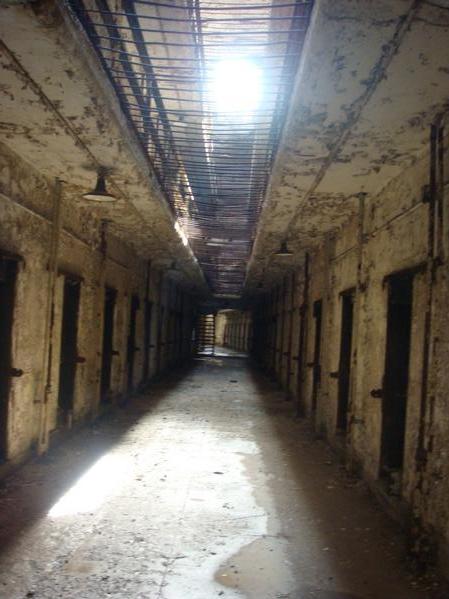
8309080001_26bd5ec4d6_zA Circuit Court has subject matter jurisdiction to enter a child custody order pursuant to the Illinois Constitution. But the Court apparently lacks jurisdiction to proceed pursuant to the Uniform Child Custody Jurisdiction and Enforcement Act (750 ILCS 36/201). If the Circuit Court proceeds anyway, is the resulting order void, voidable, or something else? In other words, where does the subject matter jurisdiction of the Illinois courts come from?

That’s the question that the Illinois Supreme Court debated late last month, hearing oral argument in McCormick v. Robertson, a decision from the Fourth District.

McCormick is a custody battle over the child of a brief relationship between a resident of Illinois and a resident of Missouri. In 2010, the father – the Illinois resident – filed a petition to establish father and child relationship, custody and related matters in the Circuit Court in Illinois. The mother – who lived in Missouri with the child – appeared pro se, and the parties presented a joint parenting agreement. Subsequently, a final judgment of parentage and custody was entered.

Three years later, the father filed a petition in the same court, seeking to terminate the joint parenting agreement and gain sole custody. The mother responded with a petition arguing that under the UCJEA, the Illinois court had never had subject matter jurisdiction, so its order was void (subject matter jurisdiction can’t be waived or conferred by consent). The Illinois court and a Nevada court where the mother had initiated proceedings held a telephone conference call and concluded that under the UCJEA, the Nevada court had subject matter jurisdiction. Subsequently, the 2010 judgment of parentage and custody was vacated as void by the Illinois court, and the father’s petition was dismissed with prejudice.

The Appellate Court reversed. The proposition that the UCJEA deprived the Illinois court of jurisdiction presupposed that statutes could add or subtract from Illinois courts’ subject matter jurisdiction, the court held. But it wasn’t so; Illinois courts’ subject matter jurisdiction flowed from Article VI, Section 9 of the state constitution, which confers jurisdiction in the circuit courts over “all justiciable matters” (with limited exceptions not relevant here). This conclusion flowed directly from the Illinois Supreme Court’s holding in Belleville Toyota, Inc. v. Toyota Motor Sales. Since it was obvious that the child custody dispute was a “justiciable matter,” if the statute couldn’t add to or subtract from the trial court’s jurisdiction, it followed that the Illinois court’s original order wasn’t entered without subject matter jurisdiction, wasn’t void, and therefore couldn’t be collaterally attacked three years after it was entered.

Counsel for the mother began the oral argument before the Supreme Court. Counsel noted that both Nevada and Illinois have asserted jurisdiction over the dispute. The mother was not and never had been a resident, nor was the child. Justice Karmeier asked whether it mattered that at the time the judgment was entered in Illinois no other state had attempted to assume jurisdiction. Counsel said no. Because the child resided in Missouri at the time, that state could have asserted jurisdiction, but Illinois had never had a claim under the statute. Justice Karmeier asked if the UCJEA trumped the state constitution. Counsel answered that the provisions of the statute do trump the constitutional provisions. Justice Thomas asked counsel whether his position was contrary to Belleville Toyota. Counsel responded that Belleville Toyota deals only with constitutional jurisdiction. Counsel argued that courts still find statutory limits on jurisdiction in particular kinds of cases, notwithstanding Belleville Toyota. Even when the court has subject matter jurisdiction, power to render a certain kind of decision is another matter. Justice Thomas asked whether the court would have to overrule Belleville Toyota to find for the mother, and counsel responded no. Justice Thomas asked whether the court would be carving out an exception for certain kinds of cases. Counsel responded that the court would either be carving out an exception, or merely taking a different view of some types of cases. Justice Thomas suggested that Belleville Toyota means that with the exception of administrative actions, this is how Illinois law addresses subject matter jurisdiction. Counsel answered that since that time, there have been decisions defining types of cases outside the strict Belleville Toyota framework. Justice Thomas asked whether a bright line rule would assist the bar. Counsel responded yes. Justice Theis asked counsel to respond to the Appellate Court’s reading of Siegel v. Siegel, which predated Belleville Toyota. Counsel responded that Siegel was published before the UCJEA was enacted, and deals with constitutional jurisdiction, not statutory limitations. Justice Theis suggested that there was a practical issue – the mother could have objected to the original Illinois trial court order, or appealed, and the issues would have been sorted out long before. Counsel was suggesting that the agreed order could be attacked anytime. Counsel responded that if there was no subject matter jurisdiction, there could be no waiver, and the Illinois order could be attacked forever. Justice Theis suggested that if that were so, then there was no finality in the order. Counsel said no, there wasn’t; if the order was void, and the trial court lacked subject matter jurisdiction, the order was subject to collateral attack. Justice Karmeier asked whether there was a possible argument that the Illinois court had jurisdiction, and had it until it conceded jurisdiction in 2013, meaning that the 2010 order was final. Counsel said no, if the trial court lacked jurisdiction, the order can’t be in limbo until somebody actually challenges it. Justice Karmeier asked whether that was right, given that the UCJEA had never been raised to the Illinois court in 2010. Counsel answered that the statute was still applicable at that time. Justice Karmeier asked whether the court would have to overrule Belleville Toyota, or carve out an exception to it. Counsel argued that there are cases carving out certain circumstances in which the Illinois courts should not exercise jurisdiction. The court might have had jurisdiction absent the UCJEA, but the statute applied from the outset.

Counsel for the father followed. Counsel argued that the mother agreed to the order, was questioned in court, had an opportunity to object to jurisdiction, and never did so. Justice Thomas asked if any of that is relevant if the trial court lacked jurisdiction. Counsel explained that he was responding to opposing counsel’s comments. Belleville Toyota is perfectly clear, counsel argued – this is a justiciable matter, the trial court had jurisdiction to rule, right or wrong, and it’s done. Chief Justice Garman asked what implications there would be for states adopting model legislation if the court held that the UCJEA was irrelevant to the jurisdictional issue. Counsel said no, but the UCJEA is a procedural statute, and the defendant had an obligation to raise it. Chief Justice Garman asked whether the father’s theory was that the mother essentially conferred jurisdiction on the Illinois courts by failing to raise the UCJEA. Counsel answered that the mother had thirty days to appeal, or two years to challenge the judgment under Section 2-1401. The Chief Justice again pointed out that counsel appeared to be arguing that the mother’s failure to raise the UCJEA initially was fatal. Counsel said yes, the mother was raising a provision of the statute regarding initial determinations of custody. Justice Thomas asked whether counsel agreed that a bright line rule would be helpful. He observed that the court has a number of cases on jurisdiction pending, so the law didn’t appear to be especially clear. Did counsel agree, or was it simply a matter of following Belleville Toyota? Counsel responded that the issue was clear. Even if there are theoretical exceptions to the rule, nothing in this case justifies adopting an exception to the bright line rule of Belleville Toyota. The mother’s position muddies the bright line of Belleville Toyota, counsel argued. It would cast doubt on long-resolved cases. A party doesn’t wait four years to attack a judgment, counsel argued. The mother argued that the UCJEA was about statutory jurisdiction, but there’s no such thing. Subject matter jurisdiction flows from the Illinois constitution, not the statute.

Counsel for the mother concluded the argument. Counsel explained that the mother had acted now because the father had petitioned to change custody in 2013. The court had ordered the mother to come to Illinois and bring the minor child with her. The UCJEA was set up to determine which state would get custody jurisdiction at certain points. The parties went through the entire statutory process the way it’s supposed to happen, with two judges in two states. So now, the case has two courts which have accepted jurisdiction. Because an interstate jurisdictional problem is involved, counsel argued, the case presents different issues than have existed in many earlier cases. The issue would continue to be defined and redefined by the courts, counsel concluded. A bright line rule would be helpful to practitioners. Counsel concluded by asking the court to affirm the trial court.

We expect McCormick to be decided in three to four months.

Image courtesy of Flickr by Bert Kaufmann (no changes).

The Illinois Pension Plaintiffs’ Brief: The Cause of State Underfunding, and The Constitutional Convention Revisited

2893860978_89147c5e0b_zAs we’ve written here, here and here, the plaintiffs in the Pension Reform Litigation pending before the Illinois Supreme Court needed to accomplish three things in their Appellees’ Briefs to put themselves in a position to prevail – answer the State’s construction of: (1) the history that led to the Pension Reform Act; (2) the history of the Constitutional Convention of 1970; and (3) rehabilitate Felt v. Board of Trustees of Judges Retirement System.

The Appellees’ Brief on behalf of the plaintiffs in Heaton, RSEA, Harrison and ISEA was filed this afternoon, and they appear to have accomplished all three goals.

The State spends considerable space in their brief arguing that the dilemma in which the State finds itself with respect to funding pensions is the result of the 2008-2009 recession, hoping thereby to fit the facts more neatly within a police powers argument. The plaintiffs answer in detail, arguing that the State’s difficulties are largely the result of the State failing to fund state pensions. As of the Public Employees Pension Laws Commission Report of 1969, the five State pension systems had an aggregate funding rate of only 41.8%. Forty-four years later, in 2013, plaintiffs argue that the same five pension systems had an aggregate funding rate of 41.1%.

Underfunding continued after the Pension Clause was approved, the plaintiffs argue. Between 1982 and 1995, the State’s contributions remained “relatively constant,” with no plan in place to address the funds’ deficits. A funding plan took effect in 1995, but the plan didn’t address unfunded liabilities; according to plaintiffs, it increased them. And even so, the State failed to live up to the plan, lowering its required contribution in 2006 and 2007 by 56 and 45 percent, respectively.

The plaintiffs address the constitutional debates next. Plaintiffs quote Delegate Kinney’s statement that the Clause was intended to ensure that if a police officer is promised a certain pension when he accepts employment, he will actually receive that amount when the time comes for retirement. The plaintiffs also quote Delegate Kemp, who pointed out that even if the depths of the Depression, retirees from the City of Chicago had not had their pensions altered.

The plaintiffs point out that only two weeks after the Pension Protection Clause was approved, the Chair of the Public Employees Pension Laws Commission wrote to Delegate Green, the co-sponsor of the Clause, to complain that the Clause was “inflexible.” The Chair urged the Convention to modify the Clause to expressly recognize the right of the legislature to “enact reasonable modifications” to employees’ contributions, minimum service requirements and other provisions in order to keep the systems fiscally sound. But Delegate Green declined to even present the proposal to the Convention.

The plaintiffs next address the legislative history of the Pension Reform Act of 2013 itself. The plaintiffs argue that the Act reduces pension benefits of retired State employees in at least five ways: by reducing automatic annual increases; by skipping the automatic annual increase in alternate years for certain employees; by capping pensionable salaries; by increasing the retirement age on a sliding scale; and by changing interest rates used to calculate certain benefits. According to the plaintiffs, the chief sponsor of the Act in the state Senate conceded during the legislative debates on the bill that the underfunding issue arose from the State not making its required contributions, and that there were “certainly” other feasible alternatives to the bill: “[M]any other things could have been possible alternatives,” the sponsor said. Plaintiffs argue that the chief sponsor also “would not agree that Senate Bill 1 was the least restrictive means available” to address the problem.

According to the plaintiffs, the State’s argument fails on the simplest grounds imaginable: it is contrary to the plain language of the Pension Protection Clause itself. According to the plaintiffs, the State argues that since the Clause fails to exempt itself from the police power, it is subject to an implicit limitation. But the law is directly to the contrary, the plaintiffs argue; no limitations can be read into the Clause which aren’t found there.

The State attempts to read the word “diminished” out of the Clause, plaintiffs insist. The State argues that “diminished” and “impaired” mean the same thing in the Clause. But basic rules of construction bar any reading of the Clause which makes any word superfluous. Indeed, plaintiffs claim, it’s even clearer than that – Delegate Kinney expressly said the “diminished” and “Impaired” meant different things.

Nor can the State’s position be reconciled with the Convention debates, the plaintiffs argue. As we discussed at length here, the plaintiffs point out that the Convention sponsors intended the Clause, to a considerable degree, as a response to Spina v. Consolidated Police & Firemen’s Pension Fund Commission (1964), a decision of the New Jersey Supreme Court which authorized benefit cuts in order to maintain pension funds’ financial viability. Plaintiffs argue that the co-sponsors intended the Clause as an indirect spur to encourage governments to fully fund the pension plans, thus averting a Spina-style underfunding crisis brought on by failing to pay liabilities as they are incurred.

The plaintiffs then turn to the case law interpreting the Pension Protection Clause. According to the plaintiffs, the Supreme Court in Felt squarely held that an amendment to the Pension Code modifying a benefits formula and thereby reducing pension annuities was unconstitutional per se. The State has argued that the Supreme Court in Felt held that there was an implied police power exception to the clause, but in fact the Court held nothing of the kind, according to the plaintiffs. The language emphasized by the State merely finds even if there were a police powers exception, the State’s claim would still fail. The Court never addressed the issue of whether any such exception existed. According to the plaintiffs, “no Illinois court” since the 1970 Constitution “has held any amendment to the Pension Code constitutional” based on the State’s police power argument.

In an earlier post, we suggested that the State’s argument could be caricatured as “the State cannot cut pension benefits – unless it really needs to.” And that’s the problem, the plaintiffs argue; the Supreme Court has repeatedly held that the General Assembly cannot enact legislation which conflicts with specific provisions of the Constitution, notwithstanding any emergency circumstances.

The plaintiffs next turn to the State’s claim that if the Pension Protection Clause is intended to be absolute in its protection of pension benefits, then the Clause violates the federal constitutional principle that states cannot bargain away part of its police powers. Plaintiffs argue that the State fundamentally misunderstands the federal reserved powers doctrine. The doctrine merely holds that states can’t surrender a sovereign power pursuant to contract, the plaintiffs argue. It offers no barrier to a State’s purely financial obligations, or constitutional limitations on the State’s power. Indeed, the plaintiffs argue, Illinois courts have recognized that financial obligations are not the same thing as police powers.

The plaintiffs conclude by addressing the question of whether the Act is severable. The Act has a severability clause, plaintiffs concede, but the Court has never considered such clauses conclusive. Notwithstanding such a clause, if important elements of a broad legislative package intended to fundamentally reform a subject area are eliminated so that the remaining portions of the statute do not resemble what the legislature enacted, the court will strike down the statute in its entirety, even in the face of a severability clause. The legislature wouldn’t have enacted the Act without the various provisions cutting benefits, the plaintiff argues; and that’s enough to doom the entire statute.

The State’s reply brief is due in ten days, on February 27. The Supreme Court has announced that the Pension Reform Litigation will be argued in a rare afternoon session at 2:30 p.m. on March 11, 2015.

Image courtesy of Flickr by Anne Swoboda (no changes).

Do You Have to Disclose a Personal Injury Claim in a Bankruptcy Proceeding?

11096611573_afe1470cc0_zCan a personal injury claim be barred by judicial estoppel if you fail to disclose the unliquidated claim in your personal bankruptcy proceeding? That’s the question the Illinois Supreme Court agreed to decide late in its January term in Seymour v. Collins, a case from the Second District.

In April 2008, plaintiffs filed a petition for bankruptcy. The following year, husband was injured at work. Plaintiffs moved to modify their Chapter 13 bankruptcy plan because husband was unable to work and was receiving workers compensation payments. The following year, husband was injured at work once again, and then injured a second time while being transported in an ambulance. He then filed a tort suit for the injuries arising out of the ambulance accident.

In July 2012, plaintiffs were granted a discharge in bankruptcy. Defendants then moved for summary judgment in the tort suit arising out of the ambulance accident, arguing that plaintiffs were judicially estopped from proceeding with their claim, since they had never disclosed their claim in the bankruptcy proceeding. The trial court granted the motion.

The Appellate Court affirmed. The five elements of judicial estoppel, the court found, were that a party (1) took two positions; (2) which were factually inconsistent; (3) in separate judicial proceedings; (4) intending for the trier of fact to accept the truth of the facts alleged; and (5) the plaintiff succeeded in the first proceeding, receiving some benefit from the position taken.

The court held that plaintiff satisfied the first element by failing to disclose their unliquidated personal injury claim. Although the bankruptcy forms didn’t affirmatively require the disclosure of such claims, the bankruptcy estate encompassed all property, including legal claims, acquired after the petition is filed but before the case is closed. Debtors have a continuing duty to disclose all assets acquired while the case remained open.

Further, plaintiffs received some benefit by failing to disclose their claim, since they avoided the possibility of creditors objecting to or seeking modification of their plan. They also received a discharge of their debts without disclosing the existence of their personal injury claims.

The majority acknowledged that some courts have held that a statement under oath is necessary for the doctrine to apply, but the court disagreed. The element was more properly expressed as an intent for the court to accept the truth of the facts asserted in support of the petition, the court found. That element was satisfied on the evidence, noting that the plaintiffs had disclosed the husband’s first workers’ compensation case in the course of seeking a reduction in their payments.

Justice Schostok dissented, arguing that a statement under oath was needed for judicial estoppel to apply, and that the evidence showed that the non-disclosure in the case was unintentional.

We expect Seymour to be decided in eight to twelve months.

Image courtesy of Flickr by Steve Lyon (no changes).

Illinois Supreme Court Debates Intersection of Party Diligence and Motions to Vacate

5107355908_1dd9e14a44_zSection 2-1401 of the Illinois Code of Civil Procedure (735 ILCS 5/2-1401) provides that a judgment may be set aside more than thirty days after its entry on petition for various reasons. So when is the apparent lack of diligence of the party seeking to set aside the judgment sufficient grounds for denying the petition? That’s the question presented in Warren County Soil & Water Conservation District v. Walters, which the Illinois Supreme Court heard oral argument on in the final week of its January term. Our detailed summary of the underlying facts and lower court judgments in Warren County is here.

The plaintiff sued the defendants for removing approximately 54 trees from its property, purporting to state claims for trespass, conversion, quantum meruit, negligence and one for violation of the Wrongful Tree Cutting Act. The defendants’ retained counsel failed to file an answer, either at the deadline, or when the Court ordered him to file a month later. The plaintiff moved for a default judgment, and counsel still failed to appear, so default was entered. A month later, the defendant’s counsel moved to set aside the default, but never noticed the motion for hearing. When plaintiff’s counsel noticed the motion for hearing, the defense counsel didn’t show up for the hearing. So the trial court denied the motion. Ten months later, the plaintiff’s counsel filed a citation to discover assets, and a week later, the court removed defense counsel and directed the defendants to retain a new lawyer. The new attorney filed a second motion to set aside the judgment, along with an affidavit from the defendant stating that the client was unaware of the default. The trial court denied the second motion to set aside, and the Appellate Court affirmed, with Justice William E. Holdridge dissenting.

Counsel for the appellant began the argument. Counsel argued that there were three issues before the Court: (1) did Section 2-1401 allow the Circuit Courts discretion to vacate unjust judgments under their equitable powers; (2) if so, what was the standard of review; and (3) applying that standard. Counsel suggested that the plain language of Section 2-1401 preserves all forms of relief which existed before the statute was enacted. What the defendant sought – discretionary relief on equitable grounds – had existed as a permissible form of relief for 148 years. Counsel suggested that People v. Vincent notes the common law roots of the statute, but went on to say that the view that abuse of discretion applied was based on the erroneous belief that Section 2-1401 invoked the equitable powers of the court. But, counsel argued, that statement is contrary to the statute’s plain language, preserving preexisting remedies. Chief Justice Garman asked if the Court should overrule Vincent. Counsel said no, the relevant language is for the most part dicta. The Court needs to revisit and revise that dicta to make it clear that courts still have some discretion here. Justice Thomas asked whether, if the Court agrees, it should remand for an assessment of the defendant’s diligence. Counsel said no, the trial court had already found that if it had discretion, it would have vacated the judgment in the interests of justice. Justice Theis pointed out that the issues of whether a defendant has a meritorious defense and exercised due diligence were judicial gloss which had been added to the statute. Did counsel have a sense of when those ideas evolved? Counsel answered that they had evolved around the Civil War. Justice Theis asked whether there was a framework for trial courts to use in exercising their equitable authority. Counsel said yes, there was both a remedy and standards to apply in using that power. Justice Theis suggested that Section 2-1401 was actually based on the proposition that a judgment was void. Should that impact the analysis? Counsel said that the elements of due diligence and a good defense still applied. Justice Thomas wondered whether the trial court had ever really considered whether it should relax the standard for due diligence. Counsel disagreed. The trial court had said that if it had the power to relax the standard of due diligence, it would, because it was difficult to think of a more unjust situation. Justice Thomas asked whether it would nevertheless make sense, if the Court held that the due diligence standard could be relaxed, to remand. Counsel answered that the Court could do that, but the trial court had already made its inclinations clear. Justice Thomas asked whether opposing counsel could test the issue, and counsel said factually, it had already been tested. There might be more briefing on remand, but plaintiff hadn’t briefed the issue of due diligence the first time around. If the Court agreed that Vincent should be revisited, then the question became whether the defendant met those standards. The defendants researched the ownership of the property, and every deed they found suggested that a certain person owned the property. They got a contract with the apparent owner, and logged the property. There was no showing below that plaintiff owned the property, counsel argued; the only documents available suggest that the party defendants dealt with owned it. Chief Justice Garman asked how the defendants’ failure to keep track of the case impacts the analysis. Counsel responded that although the defendants didn’t keep track of events when they had their initial attorney, they did when they didn’t have an attorney. If the judgment as inequitable, the negligence of their attorney shouldn’t be attributed to them.

Counsel for the plaintiff followed, arguing that Vincent is clear. The case spells out five scenarios in which Section 2-1401 can apply. Justice Thomas asked whether Vincent even contemplated the current situation. Counsel answered that it addressed several different situations, including the issue of due diligence. Justice Thomas asked counsel to address defendants’ argument that Section 2-1401 preserves common law remedies. Counsel answered that Vincent plainly states there is no judicial discretion to relax the standards. Justice Thomas asked whether counsel was saying Vincent would have to be overruled for him not to prevail, and counsel said yes. Justice Thomas asked whether the allegation that plaintiff stands to receive a windfall plays any role, and counsel said no, the only real issue is whether the standard in Vincent applies. Justice Thomas asked whether, if the Court disagrees re Vincent, the matter should be remanded to the trial court to determine whether it should exercise discretion. Counsel said yes, the trial court suggested that it would relax due diligence, but only in dicta. Justice Thomas asked whether plaintiff would want more to say about diligence, and counsel said he would. Plaintiff disagrees about ownership of the property, and would offer testimony to that issue. Justice Theis asked about the argument that two different standards of review apply for meritorious defense and due diligence. Counsel answered that such a standard would be impossible for practitioners to follow. The Chief Justice asked whether it was accurate to say that to get a more forgiving standard under Vincent, one should seek an evidentiary hearing. Counsel said yes. The Chief Justice suggested that was putting the decision as to how this turns out in the hands of the petitioner. Counsel said yes and no. To a certain extent it does; there may be some cases where due diligence and a good defense could be established on affidavits, and those could be granted without a hearing. Vincent was about summary judgments – it left the evidentiary issue for another day. Since there was no evidentiary hearing here, the plaintiff argued that it was just asking for Vincent to be reaffirmed, and for the Court to make it clear that defendants lacked due diligence as a matter of law.

Counsel for the defendant began rebuttal by reading from the trial court’s order, noting that it was bound by earlier decisions. The lower court made it clear that if it had the ability to exercise discretion, it would have set aside the judgment. The finding that the defendant had a meritorious defense was not dicta, according to the defendant’s counsel; the court said defendant had made a showing that someone else appeared to own the property. Justice Thomas asked the defendant to address the plaintiff’s argument that plaintiff would have more to say about due diligence in the event of remand. Counsel answered that the issue had been addressed below. Justice Thomas asked whether it would be a reason to relax the due diligence standard if there was a windfall here (because plaintiff didn’t actually own the property). Counsel agreed. Justice Thomas pointed out that plaintiff challenged that assertion, and wasn’t that a fact question? Counsel said no, the trial court had found no evidence to back up the plaintiff’s claim to own the property. Justice Thomas suggested that plaintiff believed it didn’t need to provide that evidence because of Vincent. Counsel answered that the 2-1401 proceeding was an entirely new proceeding, and any admissions in the default were merely evidentiary, not conclusive. The plaintiff’s claim to own the property was clearly contradicted by the defendants’ affidavits. In addition to the proposition that plaintiff never owned the property, defendants had the additional defense of bona fide purchaser. Counsel argued that the defendants had investigated, and everything they found supported the view that the party they were dealing with owned the property. The delay of the first defense counsel was a bit of a red herring, counsel argued. The plaintiff had gotten a default judgment and had sat on it, and that’s relevant to the equitable balancing. Counsel concluded by arguing that all notices on the case had gone to the original lawyer for the defendant; the clients believed that their status as bona fide purchasers was an absolute defense.

We expect Warren County to be decided in three to four months.

Image courtesy of Flickr by William Warby (no changes).

Illinois Supreme Court Agrees to Decide Whether a Condo Foreclosure Extinguishes Association’s Lien

2539334956_87cef7e457_zIn the closing days of its January term, the Illinois Supreme Court agreed to decide an issue of considerable potential importance to the real estate bar – when does a foreclosure sale on a condominium unit extinguish the Association’s lien for assessments incurred before the sale closed?  In 1010 Lake Shore Association v. Deutsche Bank National Trust Company, the First District Appellate Court, Division 2 held that where the new owner fails to pay post-sale assessments, he or she can remain liable for pre-sale assessments.

The defendant in 1010 Lake Shore bought the condominium unit at issue in 2010.  Nearly two years later, the plaintiff filed suit, alleging that the defendant owed more than $62,000 in assessments.  The plaintiff filed a motion for summary judgment, alleging that because the defendant had failed to make any payments on assessments incurred after the sale, the lien against the property resulting from unpaid pre-sale assessments had not been extinguished, making the defendant liable for those amounts too.  The defendant responded that it could not be liable for any amounts incurred before the foreclosure sale, and that a genuine dispute existed as to the amounts owed for assessments incurred after the sale.  The trial court granted the plaintiff’s motion for summary judgment and awarded the plaintiff possession of the unit.  In a subsequent order, the trial court denied reconsideration and awarded plaintiff attorneys’ fees.

A divided Appellate Court affirmed.  The issue came down to construction of Section 9(g)(3) of the Condominium Property Act, according to the majority.  The statute provides that:

The purchaser of a condominium unit at a judicial foreclosure sale . . . shall have the duty to pay the unit’s proportionate share of the common expenses for the unit assessed from and after the first day of the month after the date of the judicial foreclosure sale . . . [s]uch payment confirms the extinguishment of any lien created pursuant to paragraph (1) . . . . of this subsection (g) by virtue of the failure or refusal of a prior unit owner to make payment of common expenses, where the judicial foreclosure sale has been confirmed by order of the court.  765 ILCS 605/9(g)(3).

The plaintiff argued that the statute was plain and unambiguous – the new owner only extinguished the lien arising from pre-sale assessments by keeping current with post-sale assessments.  The majority of the Appellate Court agreed.  If the new owner could never be held responsible for earlier assessments, the Court wrote, the second sentence of the statute was rendered superfluous.

The defendant argued that this conclusion was contrary to Section 15-1509(c) of the Mortgage Foreclosure Law, which provides that a purchaser in a foreclosure sale takes the property free of all claims arising from pre-sale events.  But according to the majority, the rule of statutory construction that a specific rule trumps a general one applied.  By that standard, the rule of the Condominium Property Act prevailed.  The court found it unnecessary to consult interpretive aids such as the legislative history on the grounds that the statutory language was plain and unambiguous.

The court also rejected the defendant’s claim that the plaintiff’s claim arising from pre-sale assessments amounted to a collateral attack on the foreclosure sale and was barred by res judicata.  The majority found that the defendant had waived the argument by failing to raise it in opposition to the plaintiff’s motion for summary judgment.

Justice Liu dissented.  He argued that Section 15-1509(c), providing that pre-foreclosure sale claims and liens were extinguished by the sale, governed the dispute.  According to Justice Liu, there was no conflict between Section 15-1509(c) and Section 9(g)(3) of the Condominium Property Act.  If a lien-holder was a party to the foreclosure action, its claim is extinguished by the sale.  If for any reason a lien-holder is not named, then the Condominium Property Act governs, and the earlier lien is extinguished only if the new owner pays post-sale assessments.

We expect 1010 Lake Shore to be decided in eight to twelve months.

Image courtesy of Flickr by Jeff Turner (no changes).

Illinois Supreme Court Agrees To Decide If School Districts are Subject to Local Zoning

7732615014_56a9ccda99_zIn the closing days of its January term, the Illinois Supreme Court agreed to decide a question involving the potential collision of several different aspects of Illinois constitutional law: are school districts subject to local zoning?  The case is Gurba v. Community High School District No. 155, a decision from the Second District.

Gurba began when the bleachers at the defendant school district’s high school football field failed a structural inspection.  The school district decided to replace the bleachers entirely, moving the home bleachers to the side of the field adjacent to the plaintiff’s property in order to improve traffic flow.  The problem was, if the local zoning ordinances were applicable to the defendant’s project, the new bleachers were too big, too high, and too close to the property line.  The City issued a stop-work order against the School Board and the plaintiffs sued, seeking to privately enforce various zoning and stormwater ordinances.  The parties filed cross-motions for summary judgment, and the trial court found for the plaintiffs, determining that the school district was indeed subject to the local zoning ordinances.

On appeal, the defendant Board argued that the Illinois Constitution declares public education to be a matter of statewide concern, and that its power flowed from the legislature, with little room for municipalities to interfere – therefore, school boards were not subject to local zoning.

The Appellate Court reviewed in detail the home rule provisions and educational provisions of the state constitution, concluding that “in the case of a conflict between a home-rule unit and a school district, there is a slight bias toward the home-rule unit.”  The home rule clauses were broad and liberal in scope, the Court noted, while the constitution “is careful to emphasize the limited authority of school districts.”  Home-rule units’ powers are subject only to negative preemption by the legislature; school boards, on the other hand, have only the powers they’re affirmatively given by the legislature.

The Court conceded that education was a matter of statewide concern pursuant to the state constitution.  But this wasn’t the same thing as saying that school boards were creatures of statewide import, the Court said; local school boards remained rooted in the local community.  The notion that municipalities were powerless to interfere in school boards’ land use decisions didn’t follow from the general observation that public education was a statewide issue.

Turning to the relevant statutes, the Court emphasized the Zoning Change Provision of the School Code, 105 ILCS 5/10-22.13a.  According to the provision, local school boards are empowered to “seek zoning changes, variations, or special uses for property held or controlled by the school district.”  This provision was entirely superfluous if school boards weren’t subject to local zoning regulations in the first place, the Court noted.  Indeed, the Attorney General had recently relied on that canon of statutory construction to conclude that a local public school district was subject to municipal or county zoning ordinances, at least unless compliance interfered with the district’s ability to provide public education.  The defendant argued that the Zoning Change Provision applied only to property not being used for public school purposes, but the Court pointed out that that wasn’t what the provision said – it applied to “property held or controlled by the school district.”  The defendant pointed to a proposal currently pending in the legislature to amend the Zoning Change Provision to expressly require school districts to comply with local zoning ordinances.  The Court criticized the school board for omitting language from the amendment stating that it was intended merely to be declarative of existing law, not to change the law.

The Appellate Court concluded by applying the three-step analysis found in City of Chicago v. StubHub, Inc. for determining when a home-rule unit may concurrently regulate areas of statewide concern.  Each step in the analysis favored a finding that the municipality could enforce its zoning regulations, since the State had no traditional role in regulating local land use, and leaving such regulation in the hands of municipalities conflicted very little, if at all, with the Board’s ability to provide public education.

For all these reasons, the Court concluded that the zoning regulations were enforceable against the defendant Board and reversed the judgment, affirming the Circuit Court.

We expect Gurba to be decided in eight to twelve months.

Image courtesy of Flickr by Nicholas Balaban (no changes).

Pensions at the Constitutional Convention, Part III: The Opponents and the Vote

2875736036_fa60a7e369_zWe conclude our discussion of the July 21, 1970 debate on the Pension Protection Clause at the Illinois Constitutional Convention.  Today, we’ll take a look at more statements by opponents of the measure, the summations by the co-sponsors, and the vote.

After Delegate Kinney’s remarks, Delegate Lyons, the Vice-President of the Convention, spoke.  “I am not shocked at the notion of vesting contractual – enforceable contractual rights in these pension beneficiaries,” he said.  The Clause didn’t “refer to upfunding,” he said, “nor does it seek to establish some sort of administrative elite to administer these various funds.”

Delegate Whalen spoke next.  He suggested that perhaps characterizing pension benefits as contractual rather than proprietary rights might ultimately be to the disadvantage of pension beneficiaries if, for example, a fund were ultimately to go bankrupt.  He argued that the Clause “in no way vests any pension rights for pensioners.  All it does is say that the pension is a contractual interest which the pensioner has; and the line of cases again has repeatedly held that there is a contractual right and may be subject to any contingency built into the contract.”  Delegate Whalen suggested that the pension protection could better be addressed in the Bill of Rights, which at the time had already had provisions barring ex post facto laws, special privileges and immunities and laws impairing the obligation of contracts approved.  He suggested that the words “or pensions” be added after the word “contracts” in the contracts clause.  Delegate Weisberg echoed the suggestion that pensions be addressed in the contracts clause, and Delegate Davis suggested that the clause be either rejected outright, or at least postponed until the Convention could consult the actuary who advised the Pension Laws Commission.  Delegate Bottino suggested that “a good number of people” would be satisfied with Delegate Whalen’s proposal that pensions be folded into the contracts clause.

Delegate Green, a co-sponsor of the Clause, rose next to give his summation.  “[O]ne of the overwhelming reasons to mandate this contractual status,” he explained, “is based on a Supreme Court decision from New Jersey in 1964 that has a very, very similar pension problem to that of Illinois” – the Spina case with which we began this series.

Green noted the Supreme Court’s comment that all funds have “in common the promise of inevitable doom,” since benefits are never directly tied to income.  “Now this, ladies and gentlemen, is basically what the people of Illinois – or the public employees of Illinois – are very fearful of.”

Delegate Green explained the intent of the Clause:

What we are trying to merely say is that if you mandate the public employees in the state of Illinois to put in their 5 percent or 8 percent or whatever it may be monthly, and you say when you employ these people, ‘Now, if you do this, when you reach sixty-five, you will receive $287 a month,’ that is, in fact, what you will get.

“What we are trying to do,” he explained, “is to mandate the General Assembly to do what they have not done by statute.”  The state should “live up to the laws that they pass,” Delegate Green argued.  “If we are going to tell a policeman or school teacher that, ‘Yes, if you will work for us for your thirty years or until whenever you reach retirement age, that you will receive this’ . . . [the state] ought to live by their own rules.  And this is all in the world this mandate is doing.”

Delegate Kinney followed with her summation.  Like Delegate Green, she argued that New York had adopted a similar provision in 1938, and public employees’ pension programs had been funded without bankrupting the state.  “The thrust of it,” she said, “is that people who do accept employment will not find at a future time that they are not entitled to the benefits they thought they were when they accepted the employment . . . All we are seeking to do is to guarantee that people will have the rights that were in force at the time they entered into the agreement to become an employee, and as Mr. Green has said, if the benefits are $100 a month in 1971, they should not be less than $100 a month in 1990.”

The roll call vote on the Pension Protection Clause then began.  When it concluded, the Clause had been approved by the Convention, 57-36.

Image courtesy of Flickr by Cliff (no changes).

Illinois Supreme Court Debates Implied Right of Action Against Clerk for Miscalculating Prison Sentence

3650798406_bd97456f0d_oDuring its January term, the Illinois Supreme Court heard oral arguments in Cowper v. Nyberg, a case from the Fifth District posing a novel question: does a prisoner have an implied right of action against the circuit clerk and county sheriff for failing to accurately calculate the credit he or she is due against a prison sentence for presentence incarceration?  Our detailed report on the facts and lower court opinions in Cowper is here.

The plaintiff in Cowper pled guilty to three felony counts in 2011 and was sentenced to 27 months.  The sentencing order included a lengthy recitation of the days the plaintiff had already spent in custody, for which he was to receive credit against his sentence.  A month later, the plaintiff filed a motion to recalculate the credit, but the State didn’t respond for five months – by which time the plaintiff had already been released.  When the State ultimately answered the motion, it conceded that it had underestimated the credit the plaintiff was entitled to by 191 days.

The plaintiff sued the Circuit Court Clerk and the County Sheriff, alleging that they had a tort duty under Section 5-4-1(e)(4) of the Corrections Code, 730 ILCS 5/5-4-1(e)(4), to correctly calculate the length of the credit.  The trial court dismissed the action for failure to state a claim on defendants’ motion, but the Fifth District reversed.

Counsel for the Circuit Court Clerk led off the argument by conceding that the number of days’ credit provided by the sheriff to the Clerk and forwarded to Corrections had been incorrect.  Nevertheless, the Clerk had merely done what he was required to do under the statute.  The plaintiff’s remedy was what he had done in the trial court – to file a motion seeking to have his credit recalculated.  There are no allegations in the complaint that the Clerk had done anything more than what the statute required – to pass along the calculation provided by the Sheriff.  But the Appellate Court’s opinion would require that the Clerk – indeed, all 102 Circuit Court Clerks in the state – make independent investigations of information not readily available to them in order to double-check calculations from sheriffs.  Counsel argued that the Supreme Court had found implied private rights of action only when the statute would be practically ineffective without one.  But the purpose of the Sentencing Code, counsel argued, is to protect the public.  Justice Theis noted that counsel hadn’t argued in his brief that a motion for recalculation was plaintiff’s proper remedy; the Clerk had argued that the remedy was the grievance procedure under 730 ILCS 5/3-8-8 of the Code.  Counsel responded that he was adding to his argument.  Plaintiff had both the remedy of filing a grievance, and the additional remedy of a motion to recalculate.  Justice Theis pointed out that the plaintiff had only had the opportunity to respond to the grievance argument, and had argued that the grievance procedure related only to misconduct during incarceration.  Counsel conceded that the plaintiff had no longer been in prison when he filed his complaint, but he had been when he discovered the miscalculation.  Justice Theis asked what happened with the plaintiff’s motion to recalculate.  Counsel answered that the plaintiff’s attorney had not brought the matter to the attention of the court.  Counsel concluded by arguing that if one applies the Court’s jurisprudence on implied rights of action, the correct conclusion is that none exists here.  The statute certainly doesn’t authorize a claim, and the consequence of implying one would be for the courts to be flooded with claims arising from all kinds of errors.  After all, counsel argued, implied rights of action couldn’t be found under only one section of the Code.

Counsel for the plaintiff followed.  He agreed that the plaintiff had filed a motion to recalculate almost immediately after discovering the error, and no answer had been filed for five months.  Justice Thomas asked whether that proved the defendant’s point that a motion is the plaintiff’s remedy.  Counsel answered that plaintiff had received no benefit from winning the motion.  Justice Thomas suggested that even though the timing didn’t work out in this case, that didn’t make the remedy inadequate.  Counsel answered that requiring a motion to recalculate means that the prisoner will have to wait in prison for a motion to be heard before the error can be corrected.  Counsel noted that the Clerk argued that he had merely transmitted the numbers provided by the Sheriff, but he said that the case is just at the pleading stage.  The credits which were received from the Sheriff and the number transmitted to Corrections were all questions of fact which could be resolved later.  The Chief Justice asked whether the Clerk would be exonerated if he merely transmitted the numbers received from the Sheriff, and counsel said yes, the Clerk has no independent duty to verify.  Counsel denied that his claim would lead to a flood of sentencing-related litigation.  Justice Thomas noted that the Court has said that an important consideration in determining whether a right of action is implied by a statute is whether a statute is intended to be remedial.  Was the relevant section of the Code remedial?  Counsel said no, but all four factors prescribed by the Court for determining whether to imply a right of action were satisfied.  Justice Thomas noted that the Court’s cases say that where a statute provides no consequence for failure to comply, it is directory, not mandatory.  Given that the Code doesn’t include a consequence for failing to transmit the proper credits, does that mean the Code is directory?  Counsel said yes. Justice Thomas asked whether it was a curious result to imply a private right of action for violating a directory statute.  Counsel said no, since there is no other remedy which will cause compliance.  Every factor found in the cases weighs in favor of an implied right of action, counsel argued. Plaintiff was clearly a member of the class which the Code was intended to affect.  An implied right of action was clearly consistent with the underlying purpose of the statute – to prevent arbitrary and oppressive treatment of prisoners and to restore offenders to useful citizenship.  Chief Justice Garman asked whether it made any difference whether the miscalculation was intentional or negligent. Counsel said here, it did not – admittedly, the Clerk hadn’t done anything intentional.  Counsel continued with the factors from the cases.  Certainly, this injury was one which the statute was intended to prevent.  The Code provisions were intended to prevent adjudicated offenders from being kept beyond their lawful sentences.  The final factor is whether an implied right of action is necessary for an adequate remedy.  Counsel argued that a motion was not an adequate remedy, and the grievance procedure didn’t apply, since the injury hadn’t happened during the plaintiff’s prison term.  The Department of Corrections is duty bound to enforce the sentencing order, counsel acknowledged; there would be nothing that the Department could have done, even if it had agreed with the plaintiff’s position.  The Chief Justice asked whether there would be a cause of action regardless of the length of time which a prisoner was detained past his or her sentence, and counsel said yes.  All four factors for determining whether there’s an implied right of action weighed in favor of the Fifth District’s decision, counsel concluded, and without one, plaintiff would have no recourse for the error.

Counsel for the Clerk rose in rebuttal, arguing that it was the duty of plaintiff’s lawyer to pursue his motion to recalculate.  Justice Theis asked whether there was any indication in the record what happened to the motion, and counsel said no.  The plaintiff hadn’t brought the motion to the trial court’s attention, but nevertheless, that was his remedy.

We expect Cowper to be decided in three to four months.

Image courtesy of Flickr by ForensicBones (no changes).

Pensions at the Constitutional Convention, Part II: The Clause is Introduced

8815181402_16a98b030e_zAlthough there were several reasons for the 1970 Illinois Constitutional Convention, public pensions became a major subject of discussion in the weeks before the delegates gathered.  Elmer Getz, the Chair of the Convention’s Bill of Rights Committee, wrote: “I began to receive an extraordinary number of communications on the pension and retirement rights of government employees, particularly those connected with state universities. These people were sold the idea that their rights were imperiled and that they would be left destitute or, at the very least, prejudiced, unless the Bill of Rights contained a protective provision in their behalf. I received hundreds, if not thousands, of letters and petitions from them.”  In addition, the Chair of the Local Government Committee received many letters from police and fire fighters concerned that the municipalities, newly granted home rule authority, would use it to slash or eliminate pension benefits.  In the days before the Clause was introduced, all convention delegates received a letter from the chair of the Employees Advisory Committee to the State Universities Retirement System arguing that constitutional protection for pensions was necessary because “the State Legislature has failed to finance the pension obligations on a sound basis.”

On July 1, 1970, Republican delegate Helen Kinney – seconded by Chairman Gertz – offered the original version of the Pension Protection Clause.  The clause was in substantially the form ultimately approved, both providing that (1) pensions were a “contractual relationship,” and that (2) benefits “shall not be diminished or impaired.  The Clause expressly authorized increases in benefits.  Delegate Kinney’s resolution asked the Rules Committee for a recommendation as to where the Pension Protection Clause belonged in the constitutional structure.  (For the transcripts of the Convention debates, see here.)

The Rules Committee ordered that the Clause be considered as part of the legislative article in order to enable it to be part of the first reading.  Three weeks later, the debate on the Clause resumed.  By this time, the Clause had picked up eighteen additional co-sponsors, and the language expressly reserving the right to increase benefits had been dropped.

In the first moments of the debate, Delegate Kinney explained that “the word ‘enforceable’ is meant to provide that the rights so established shall be subject to judicial proceedings and can be enforced through court action.  The word ‘impaired’ is meant to imply and to intend that if a pension fund would be on the verge of ‘default or imminent bankruptcy, a group action could be taken to show that those rights should be preserved.”

Kinney explained that her interest in the issue had flowed from her acquaintance as a criminal prosecutor with many police officers and fire fighters who were alarmed by the prospect of home rule.  “I think that this would simply be a means of giving them assurance that these benefits will not at some future date be eliminated on the part of municipalities who do contribute to these funds,” Kinney said.  Delegate Kemp observed that the purpose of the Clause was “to make certain that irrespective of the financial condition of a municipality or even the state government” that retired employees “could at least expect to live in some kind of dignity during their golden years.”

Delegate Parkhurst, an opponent of the Clause, next warned that the Clause would inevitably lead to arguments – if not a court ruling – that pension funds had to be fully funded at all times.  “If we are going to get to the point in the state of Illinois where we can’t pay the pensions,” he observed, “we’re down the drain anyway.”

Delegate Elward also spoke in opposition to the Clause.  Endorsing Parkhurst’s comments, Elward observed that if the Clause didn’t require full funding by the government “it doesn’t do anything.”  As written, he argued, the Clause seemed to require that “the present structure is to be frozen in for all time to come.”  Delegate Borek opposed the Clause as well, arguing that the words “diminished or impaired” suggested that “the treasury of the state of Illinois would guarantee 374 pension funds, should they go broke, they will reimburse them to the extent that they can operate.”

Vice-President Lyons, a supporter of the Clause, denied that the Clause was intended to require full funding – “nobody’s got that kind of money.”  According to Delegate Parkhurst, the Local Government Committee had talked extensively to police and fire fighters, and had explained to them that restrictions on home rule would prevent local governments from invading pension funds.  Parkhurst said that he had believed that the “furor that descended upon the Local Government Committee” was “pacified and settled and solved” by that explanation.  But the Clause being proposed was much broader in scope, he said.

Delegate Kinney explained the sponsors’ intentions in detail:

Benefits not being diminished really refers to this situation: If a police officer accepted employment under a provision where he was entitled to retire at two-thirds of his salary after thirty years of service, that could not subsequently be changed to say he was entitled to only one-third of his salary after thirty years of service, or perhaps entitled to nothing.  That is the thrust of the word ‘diminished.’  It was not intended to require 100 percent funding or 50 percent or 30 percent funding or get into any of those problems, aside from the very slim area where a court might judicially determine that imminent bankruptcy would really be impairment . . . It is simply to give [employees] a basic protection against abolishing their rights after they have embarked upon the employment – to lessen them.

In our next post, we’ll continue looking at the July 21, 1970 debate of the Pension Protection Clause.

Image courtesy of Flickr by Justin Brockie (no changes).

Pensions at the Constitutional Convention, Part I: The New Jersey Spina Decision

3963661351_b117afb01e_z(1)One of the central issues in the ongoing battle, now pending before the Illinois Supreme Court, is about what the delegates to the Constitutional Convention of 1970 who adopted Illinois’ Pension Protection Clause understood the Clause to mean.

The State argues in defense of the pension reform bill that the Clause was merely intended to give state employee pensions the status of contractual rights, nothing more.  The plaintiffs – and the Circuit Court – held that the Clause was intended to impose an absolute bar on cutting pension benefits.

Any discussion of the Pension Clause debates has to begin six years before the Convention, with Spina v. Consolidated Police Pension Fund Commission, 197 A.2d 169 (N.J. 1964).  As we’ll see in the next few posts, Illinois’ Pension Protection Clause was intended to a considerable degree as a response to the decision in Spina.

The facts which led to Spina sound quite a bit like Illinois’ recent history.  By 1918, New Jersey had figured out that it had a serious problem.  As the New Jersey Supreme Court put it, New Jersey at the time had 55 different pension funds for police and firefighters, and “[a]ll of these funds had in common the promise of inevitable doom.”  Even then, revenues weren’t pegged to benefits, so bankruptcy was inevitable.  In 1920, the state legislature adopted a new pension statute which appeared to mandate that all funds in the state be fully funded.  It didn’t happen; twelve years later, the funds collectively were $99 million in the red.  By 1950, the funds – by then numbering some 200 – had a combined deficit of $209 million.  That report – and the dire picture it painted of the viability of the pension funds – led directly to the 1952 reform statute at issue in Spina.  Much like Illinois’ 2013 Pension Reform Act, the 1952 statute tried to address the years of underfunding by the government by changing eligibility rules.  The plaintiff police and fire fighters, who previously could retire at age 50 after 20 years of service, now had to wait until age 51 and 25 years of service.

The Supreme Court unanimously rejected the plaintiffs’ suit: “Our cases have uniformly held that the Legislature may revise pension plans which governmental employees are required to join.”  Plaintiffs responded that those cases were the result of an earlier era when pensions were thought of as gratuities.  Today, the plaintiffs argued, they were seen as part of compensation.

But finding the pensions to be a contractual right was an unsustainable idea, the Court said: “If the contractual obligation of the public employer is really to equal the expectations of all the rank-and-file members, it must include a guaranty by the employer of the solvency of the fund.”  The Court noted that it might hold that the legislature had an implied power to revise the terms of the pension “contract” for the good of all concerned, but ultimately it made more sense to conclude that “contract” was an inadequate concept to use in understanding pensions.  In any event, the Court wrote, “even in the ‘contract’ jurisdictions, there would be little doubt as to the power of the Legislature to deal with an insolvent fund in the way in which our Legislature has dealt with the funds before us.”

Next time, we’ll begin our look at the Constitutional Convention.

Image courtesy of Flickr by Rob Shenk (no changes).

LexBlog